/ CONFERENCES
APPEC
8 September - 11 September | Singapore
/ CONFERENCES

/ CONFERENCES
8 September - 11 September | Singapore
/ CONFERENCES

Listen to Arsalan Syed, Business Development, Environmental Solutions and Emmanuel Corral, Head of Emissions Insight and Analytics as they recap the Carbon Management Conference 2025. The carbon management sector is entering a new phase of growth and alignment, as leaders from across industries gathered at the Denver Carbon Management Conference to explore how companies are integrating supply chain emissions and carbon markets into broader decarbonization strategies. Rather than retreating from voluntary carbon markets and supply chain reductions, many corporates are taking a more rigorous and holistic approach—strengthening emissions performance while actively engaging with high-integrity carbon credit frameworks. This shift reflects a growing understanding that carbon markets and internal abatement efforts can be mutually reinforcing, not mutually exclusive. Participants emphasized the need for greater standardization and transparency to build confidence in the market. Momentum is building around third-party verification systems like ICVCM and ratings agencies, as well as credits that deliver measurable co-benefits for communities and ecosystems. At the same time, attention is turning to value chain emissions, with companies looking deeper into Scope 3 impacts and seeking innovative solutions that align operational resilience with climate goals.

The oil and natural gas industry faces "unprecedented" and "uncertain times" with trade and tariff changes on an almost daily basis and goals to reduce carbon emissions facing the reality that nothing will work unless it’s economical, senior industry executives said at the 32nd annual Middle East Petroleum & Gas Conference in Bahrain’s capital Manama on May 26-28. With the country’s oil minister Mohamed bin Mubarak Bin Daina at the helm, Bapco Energies CEO Mark Thomas and S&P Global Commodity Insights Co-President Mark Eramo opened the conference. A successful energy transition depends on advancing traditional and renewable energy at the same time, Eramo told the conference. The Middle East continues to anchor global energy supply, policy and pricing, he noted. But energy must be affordable, with refineries and other downstream industries dependent on low costs to succeed. Carbon must be seen as an asset, not just a liability, the co-president noted. Developing countries are choosing energy security over speed of their energy transitions, with economic growth, affordability and energy access taking precedence over rapid decarbonization. One-size-fits-all approaches to transition are neither fair nor effective in a divided global energy economy, he noted. Natural gas is top of mind for energy transition in Saudi Arabia, where the fuel will "be a key beyond 2050," Musaab al-Mulla, VP of market analysis and sustainability for Saudi Aramco, told a panel. He noted gas has been important for the country since the 1970s when industries such as power generation were being developed. Moving to hydrogen will also be key, "but it's very expensive," he said. While Aramco is ready to produce fully-certified blue hydrogen, having worked with South Korea and Japan, "there are no offtakers because of the cost, but once a demand is triggered, the supply will be there from gas." A year ago, climate goals dominated agendas, energy security was gaining momentum and $60/b crude oil wasn’t part of the debate. "Today that number is back in the headlines," Bapco Energies’ Thomas said in his opening speech. With oil demand at a record high, solar and wind renewables gaining share in electricity generation, gas demand on the rise and coal demand at all-time highs largely due to rising power consumption, "we’re not experiencing a transition away from hydrocarbons. We’re in an energy addition cycle," Thomas said. Trade tensions, geopolitical conflicts, regulatory fragmentation and supply chain shocks are no longer temporary anomalies. They are persistent realities. And they are all converging in ways that challenge long-held assumptions," he said. Attendees were asked to "lean into the difficult questions. Balance ambition with realism and remember that the objective isn’t just to transition energy, but to advance it and to build affordable, cleaner and sustainable energy solutions. FGE Chairman Emeritus Fereidun Fesharaki brought out his famed Crystal Ball and warned that while OPEC+ may need to return to market management in 2026, the market now is digesting barrels being added after years of cuts. The Crystal Ball worries about 4Q 2025," he said in his presentation. In reference to Iran sanctions, the Crystal Ball expects increasing sanctions on ports, refineries and other physical assets. The existing refinery fleet will have to run harder to replace lost capacity and meet new demand, as the EU middle deficit widens. However, the second half of 2025 is still challenging as new capacity ramps up and China "lurks as an export threat. LNG demand is seen peaking much later than oil, perhaps not until the mid-2040s, he said. Sustainable aviation fuel means making an investment close to $2 billion, Linn Tonsberg, director of BP aviation for Middle East and Africa, said. While mandates would create the demand, "there needs to be that certainty in the longer term as it pertains to the supply side in order to ensure that you can make these type of stand-alone investments. Trade discrepancies or trade imbalances from wars and sanctions have "always existed but probably they’re at a peak point right now," Tom Baker, managing director at Vitol Bahrain, said. More than 150 million barrels of oil on the water are taking different routes or going to different destinations than a decade ago, due to wars and sanctions, he said. "A lot of oil that would naturally flow into Europe is going to Africa, South America, Far East. This alone is maybe contributing 40 to 50 million barrels in excess flows." Shipping attacks in the Red Sea have contributed 30 million to 40 million barrels, he added. "That is calming down a little bit. We’re seeing more flows going through the Red Sea." But no matter what the challenge, "the markets have been very efficient at creating solutions," Baker said. "Yes, there are longer routing miles, but solutions came up in terms of different shipping alternatives, different insurance, different financing. It's created a whole different industry alongside maybe what you call the traditional trading industry. And the market -- the barrels are finding their way to market."

The electric power sector faces dual challenges of rapidly expanding capacity while navigating an unpredictable regulatory landscape, according to industry leaders at the 40th annual Global Power Markets Conference, reports Kassia Micek, senior editor with SP Global Commodity Insights' Megawatt Daily.Conference participants emphasized that meeting projected demand growth from increased electrification, data centers and domestic manufacturing will require a comprehensive "all-of-the-above" approach to both generation and transmission development. However, the pace and magnitude of data center expansion—a major driver of new demand—remains difficult to forecast with precision.The constantly shifting federal policy environment has emerged as a significant impediment to industry planning, creating substantial uncertainty for developers and financiers alike. While regulatory evolution is expected in any market, the current volatility has effectively frozen many investment decisions as stakeholders await more stable policy direction.

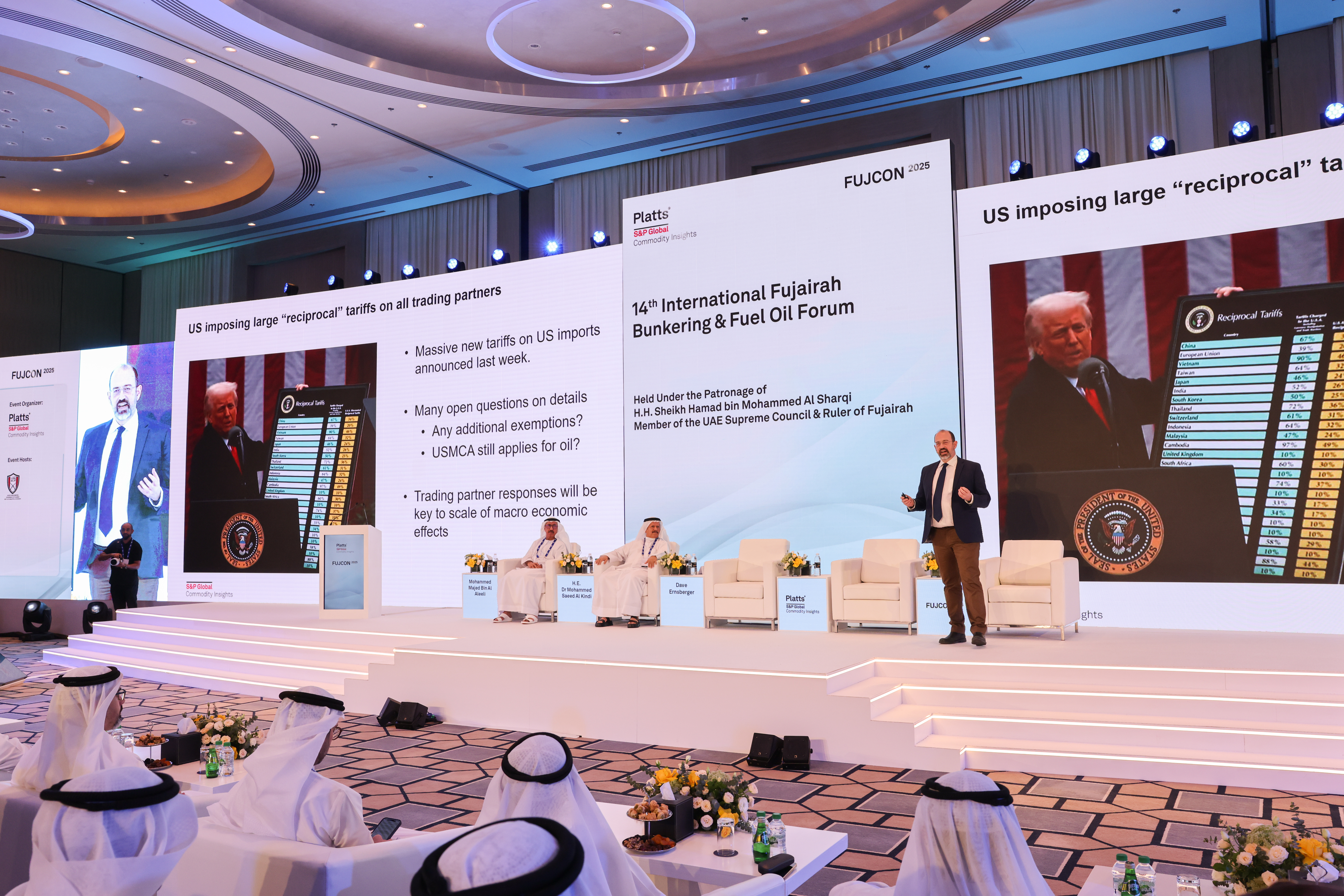
Kenny MacLean, Chief Operating Officer at global bunker supplier Peninsula joins Downstream Oil Reporter Kelly Norways to reflect on FUJCON 2025 and the changing fuel demands of today's maritime sector. Hear more on the influence of shifting trade routes, the likely impact of the IMO's new global emissions levy mechanism and how suppliers are preparing for the new Mediterranean ECA zone in May.

Ahead of the Middle East Petroleum Gas Conference (MPGC 2025), David Bird, CEO of OQ8, joins Daniel Evans of SP Global Commodity Insights for an exclusive discussion on the evolving refinery landscape in the Middle East.They explore key topics, including shifting fuel oil demand centers, the role of new versus older refineries, and strategies for integrating renewables. The conversation highlights the increasing reliability, infrastructure advancements, and operational efficiencies of modern Middle Eastern refineries, reinforcing the region’s appeal as a significant place for energy investment. Join David and other industry experts from May 26-26 in Bahrain to gain valuable insights and strategic perspectives for navigating the refining landscape. Don’t miss this opportunity to stay ahead and connect with key market players! Register now: https://commodityinsights.spglobal.com/MPGC.html
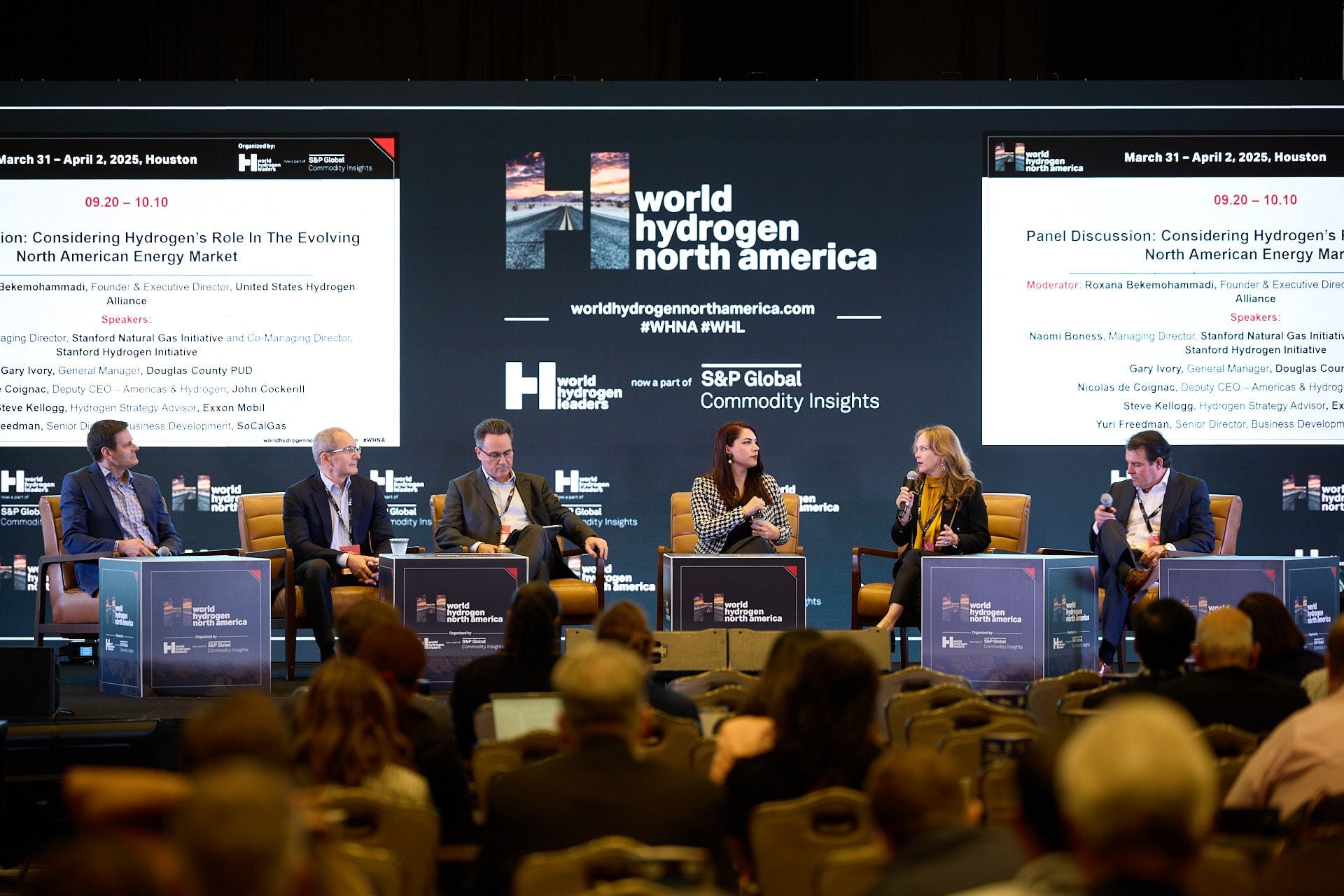
A "consensus" is forming that hydrogen is one of the best bets to decarbonize heavy-duty transport, but getting there will take years or decades of market development and risk management, panelists said at the World Hydrogen North America conference.Panelists at the conference, which ran in Houston from March 31 - April 2, saw hydrogen as particularly promising for heavy-duty, long-distance transportation. Panelists especially highlighted hydrogen’s potential in truck fuel while acknowledging its challenges, including limited refueling stations, high capital cost for infrastructure and technological complexities."We are in an interesting starting point today with hydrogen, very much like what we were in in 2019 with electric vehicles," Paul Rosa, senior vice-president of procurement and fleet planning at Penske Truck Leasing, said.Steve Kellogg, hydrogen strategy advisor at ExxonMobil, was explicit about hydrogen's potential in transportation, saying it is "likely to be the best solution" for heavy-duty long-haul transportation in the US. He said hydrogen has evolved away from being considered a "silver bullet" and said there is an "emerging consensus on where it really fits."John Hall, CEO of the Houston Advanced Research Center, said Texas is looking at hydrogen as a potential solution for decarbonizing heavy-duty trucks."There is a consensus emerging in Texas [on] what the solutions are," Hall said. "We have major companies making investments and all of these sources of energy recognizing that they need to be broadly deployed, particularly over the next 15 years… I'm optimistic that we can still get there."ChallengesThe lack of widespread commercial deployment is caused by a variety of factors commonly discussed, like the high costs of vehicles and fuel. Additionally, the lack of commercial presence for these vehicles itself brings upward pressure on pricing, Julia Schulz, managing consultant at the Center for Transportation and the Environment, said.Schulz said there is a lack of long-term performance data for these vehicles, which adds to already high upfront vehicle costs."These vehicles haven't been through a full life cycle yet," Schulz said. "Insurance brokers are struggling to provide premiums that are affordable because there's so much risk."High capital expenses required for hydrogen refueling stations means high costs for the dispensed hydrogen, and the more vehicles deployed "means the burden is shared amongst many players, and the more the cost will go down," she added."If you go to the pump station right now, you might see $36/kg," Schulz said.Platts, part of S&P Global Commodity Insights, assessed the March monthly average hydrogen pump price in California at $34.34/kg on April 1 for light duty applications. Pump prices in the state are elevated partly due to ongoing station outages caused by supply disruptions.Schulz said reaching scale is "the main goal" of the Alliance for Renewable Clean Hydrogen Energy Systems and other the other six $1 billion Department of Energy hydrogen hubs. These hubs are currently in limbo after President Trump paused the disbursement of funds from the Inflation Reduction Act and bipartisan infrastructure law on Jan. 20. Some of the hubs’ funding may be on the chopping block, including ARCHES, according to a leaked document.One of the strategies to tackle these compounding issues include long-term subsidies that could cut higher upfront costs and increase confidence, Schulz said."We’ve lost Hyzon, we’ve lost Nikola, we’ve had truck delays… We’re in this point where we are at the bottom of this valley," she said. "Subsidies make these things happen right now."Rosa said subsidies could also introduce uncertainty for companies looking to decarbonize their fleets."If companies start this transformation of their fleet from diesel to some of the alternatives with the subsidies, and then the subsidy goes away… what are they going to do?" Rosa said.Garbage truck maker Hyzon announced its Nasdaq delisting after California's Hybrid and Zero-Emission Truck and Bus Voucher Incentive Project's general fund ran out of cash in November 2024. The company was in the process of negotiating contracts for its trucks and had "multiple fleets at signatures" when it learned the HVIP general fund "went to zero," former CEO Parker Meeks said at a conference on Dec. 8, 2024.Rosa said diesel vehicles today are "as clean as they have ever been," and the decarbonization strategy for heavy-duty trucking should be retiring older vehicles that are polluting the most and replacing them with a newer, "cleaner diesel" vehicle."What we have to focus on is not necessarily getting more battery electric or more hydrogen right away," Rosa said. "This is not a sprint, it's not even a marathon... this is a journey that's going to take us decades to get there," he added. "We’ll get there… but it's got to happen because of the right reasons." By Daniel Weeks
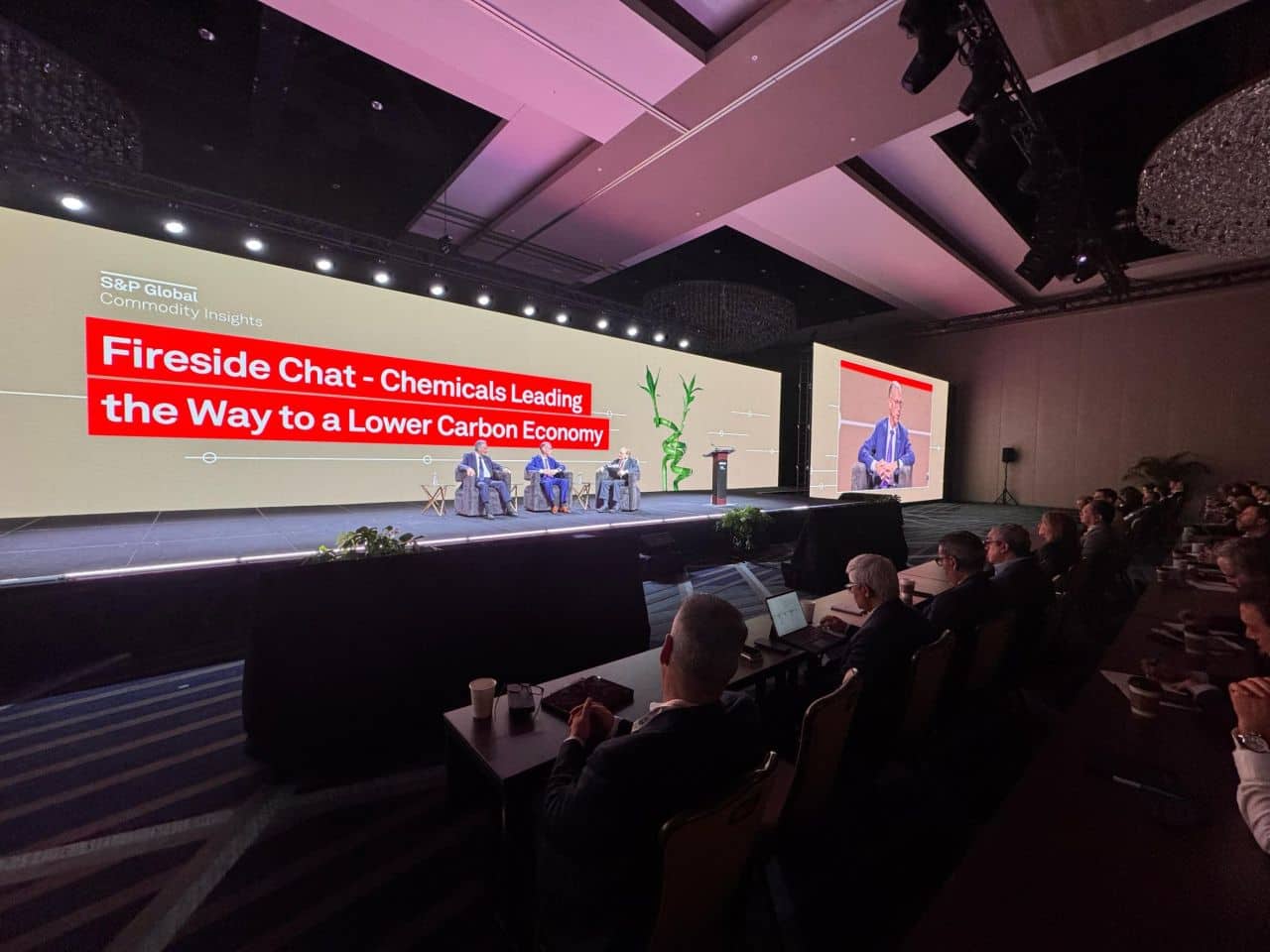
By Rob Westervelt, Chemical Week The global chemical industry faces market challenges through at least 2026 as it works through significant overcapacity, particularly from China’s massive capacity expansion, according to senior industry executives speaking at the 40th World Petrochemical Conference (WPC) in Houston March 17-21."How long it takes to work off the oversupply is a major topic of discussion," said Mark Eramo, co-president of S&P Global Commodity Insights in an interview at the conference. "It could be end of ‘26, early ‘27 before we really start to come out of it, and it’s going to take both idling and maybe shutting down capacity and sustained continued growth of the global economy to get us out of this."The current downturn represents one of the longest troughs in decades, according to Dow Chairman and CEO Jim Fitterling."A typical trough would last 24 months; three years is a relatively long trough," Fitterling said in an interview. "We’ve only had four periods where we’ve had this long a trough since the 1970s. The driver of weakness here is sustained below-3% global GDP."Market divergenceFitterling noted a two-speed economy, with some sectors showing resilience while others face significant headwinds."The services sector, electronics, semiconductors, and things related to the power and utilities industry are doing well. Even automotive is still holding up relatively well," Fitterling noted. However, housing-related demand remains weak across most global regions due to high interest rates and inflation.European producers face particularly acute challenges due to high energy costs stemming from the Russia-Ukraine war and the push toward higher-cost green energy alternatives. The combination of high crude oil prices, naphtha-based production costs and elevated energy expenses has pushed European producers to the high end of the global cost curve."Europe is challenged, and maybe I’m being kind there," Eramo said. "The energy structure in Europe has left its downstream industries, refining and chemicals, in a noncompetitive position. And that’s dangerous to be in a market that is oversupplied."Geopolitical headwindsRising geopolitical tensions have broadened uncertainties that chemical producers must consider when evaluating investments, according to conference speakers."The one way that others know they can hurt the United States, as a result of the experience we had with the pandemic, [is] the disruption of supply chains," said Carlos Pascual, senior vice president of geopolitics and international affairs at S&P Global.Ilham Kadri, CEO of Syensqo SA, emphasized that uncertainty impedes business planning. "What’s more difficult to handle is the stop-and-go. ... This is where the market gets a bit anxious, not knowing where to go and what the next thing will be."As supply chain logistics form a greater part of chemical companies’ strategic planning, "right-shoring" strategies should take the place of nearshoring or farshoring, Bob Patel, former CEO of LyondellBasell and W.R. Grace, said in a panel discussion March 18.While shifting geopolitics and tariff threats have made nearshoring to an extent "inevitable," said Peter Huntsman, CEO of Huntsman, during the same panel discussion, others on the panel noted that in an industry with long and complex value chains, placing the right elements of logistics in the right place requires better strategic thinking.Adaptability is keyThis approach requires flexible supply chains that can swiftly respond to fluctuations in demand and unforeseen challenges.However, Patel added that transitioning from current export-oriented dynamics in China, for example, remains a challenge for the chemical industry."The chemical industry continues to create opportunities and adapt during disruptive periods," Huntsman said.Despite the challenges, some companies are pushing ahead with major projects, which benefit from cost advantages. ChevronPhillips Chemical said its planned new crackers in the US and Qatar are set to start up next year."2025 is looking a lot like the last year, which would say that you have demand growth, especially in the US, but a tough margin environment, and [it is] tough to get the types of returns you’re looking for," said Steve Prusak, CEO of CPChem in an interview.Looking ahead, industry leaders see potential growth opportunities in emerging markets, though timing remains uncertain. "Africa will certainly be prominent in the next 40 years," said Patel. "But in the next five years? It is difficult to tell." For the latest news about the chemical industry, visit chemweek.com

Key industry players joined Rob Westervelt at WPC 2025 to discuss the industry's outlook, key strategic trends, and strategies for navigating market, trade and policy uncertainties. Watch all the discussions on Chemweek LIVE and save the date for the 2026 World Petrochemical Conference March 23-27 in Houston!

In this preview discussion ahead of the Global Power Markets Conference, Farish Mozley from EDP Renewables North America and Grace Parker of SP Global Commodity Insights emphasize the critical role of a diverse energy mix for grid resilience and managing price volatility amid recent geopolitical events.They explore the "energy trilemma" within the context of electrification and decarbonization, highlighting the impact of federal and state policies on grid reliability and infrastructure updates. Investors are urged to integrate renewable energy into existing operations and prioritize infrastructure development as a growth opportunity.Join Farish and other industry experts from April 14-16 in Las Vegas to gain valuable insights and strategies for navigating the evolving energy sector. Don't miss this opportunity to stay ahead in the energy market!Register now: https://commodityinsights.spglobal.com/global-power-markets-conference.html

Listen to SP Commodity Insights’ Co-PresidentDave Ernsberger, as he delves into the latest insights from the Platts London Energy Forum, exploring how the crude oil marketbenchmarks, and global economic policies are evolving.Gain an insider’s perspective on the impact of Midland’s inclusion in the Brent benchmark, the potential ripple effects of U.S. tariffs and geopolitical shifts, and how Saudi ArabiaRussia, and the U.S. control 40% of global oil supplyPlus, hear market predictions for 2025 oil prices—will we see a new paradigm emerge?Don’t miss this expert analysis on the forces shaping the future of energy!

Guillermo Chavez, Consulting Director for Power and Renewables at SP Global Commodity Insights, discusses key insights from the Caribbean Energy Conference. The Latin American power market is experiencing significant growth driven by renewable energy expansion. At the conference, experts discussed how to balance affordable electricity, secure markets, and sustainable solutions. The region, with one of the cleanest electricity systems globally, aims to triple its renewable supply by 2050. Key challenges include infrastructure development, investment, and regulatory frameworks. Public-private partnerships and foreign investment will be crucial for achieving decarbonization at affordable prices. The region's outlook is closely tied to global energy trends and policies addressing climate change.Save the date! Caribbean Energy Conference 2026January 27-29 Rio Grande, Puerto Rico

A comprehensive review of Article 6 of the Paris Agreement is scheduled for 2028, marking the next stage in the carbon crediting mechanism’s transition from negotiation to execution, the UK's chief carbon markets negotiator said Dec. 3. Speaking at S&P Global Commodity Insights' Global Carbon Markets Conference in Barcelona, Dexter Lee described the rules established in Baku as a critical milestone, noting the outcome included much "stronger language" to tackle "inconsistencies" and build integrity in the mechanism. "In 2028, there will be a review of the system and we hope there will be more experience from activities," said Lee, who works in the government’s Department for Energy Security and Net Zero. "We expect to see some more deals coming forward. And in the context of countries starting to announce new Nationally Determined Contributions [NDCs] by next year, we’d like to see more action in that respect," he said. After close to a decade of negotiations, nearly 200 countries finally agreed on the rules for two distinct carbon market mechanisms at the UN’s climate talks in Baku over Nov. 11-22. Lee said the UK took a stronger stance on the language and processes around the transfer and authorization of credits under Article 6.2. Authorization and revocation are crucial under Article 6.2 to build integrity and reliability in the mechanism. Article 6.2 sets out a system of national accounting for greenhouse gas emissions, with common principles allowing cross-border exchange of credits. Countries can adopt credits, known as Internationally Transferable Mitigation Outcomes, or ITMOs, under the sub-article. "One of the key issues we focused on was the changes to authorization. In Dubai [at COP28] last year we had to reject the text because there were no strong provisions on this," Lee said, adding the text adopted at COP29 included "stronger language." Buyer countries like Singapore, Japan and Switzerland pushed for assurance that Article 6.2 authorizations would remain stable in the face of political events. Host countries in the developing world, meanwhile, pushed for flexibility to ensure they had sufficient credits to meet their own climate commitments. Rules to operationalize Article 6.4, establishing a framework for a global carbon market run by the UN, were also agreed at COP29. Article 6.4 allows a company in one country to reduce emissions domestically and have those reductions credited so that it can sell them to a different company in another country. Lee told Commodity Insights the UK was not looking to get involved immediately as a buyer of Article 6 credits, as the near-term focus was on domestic initiatives. The parliamentary Climate Change Committee has recommended the UK’s Nationally Determined Contribution commits to reduce territorial greenhouse gas emissions by 81% from 1990 to 2035. The Platts Nature-based Avoidance carbon credit price was assessed at $4.35/mtCO2e Dec. 2. The assessment averaged $6.23/mtCO2e and $13.14/mtCO2e in 2023 and 2022, respectively, Commodity Insights data showed. By: Eklavya Gupte

Discover the remarkable journey of Zeng Shu Fei, CEO of KH Marque, a finalist for the Global Energy Awards. In our exclusive interview, Shu Fei shares her innovative methods for collecting used cooking oil in Malaysia and her ambitious plans for expansion across Southeast Asia.She addresses the challenges of establishing a supply chain from the ground up, the role of technology in enhancing traceability, and the key trends influencing the renewable energy sector.
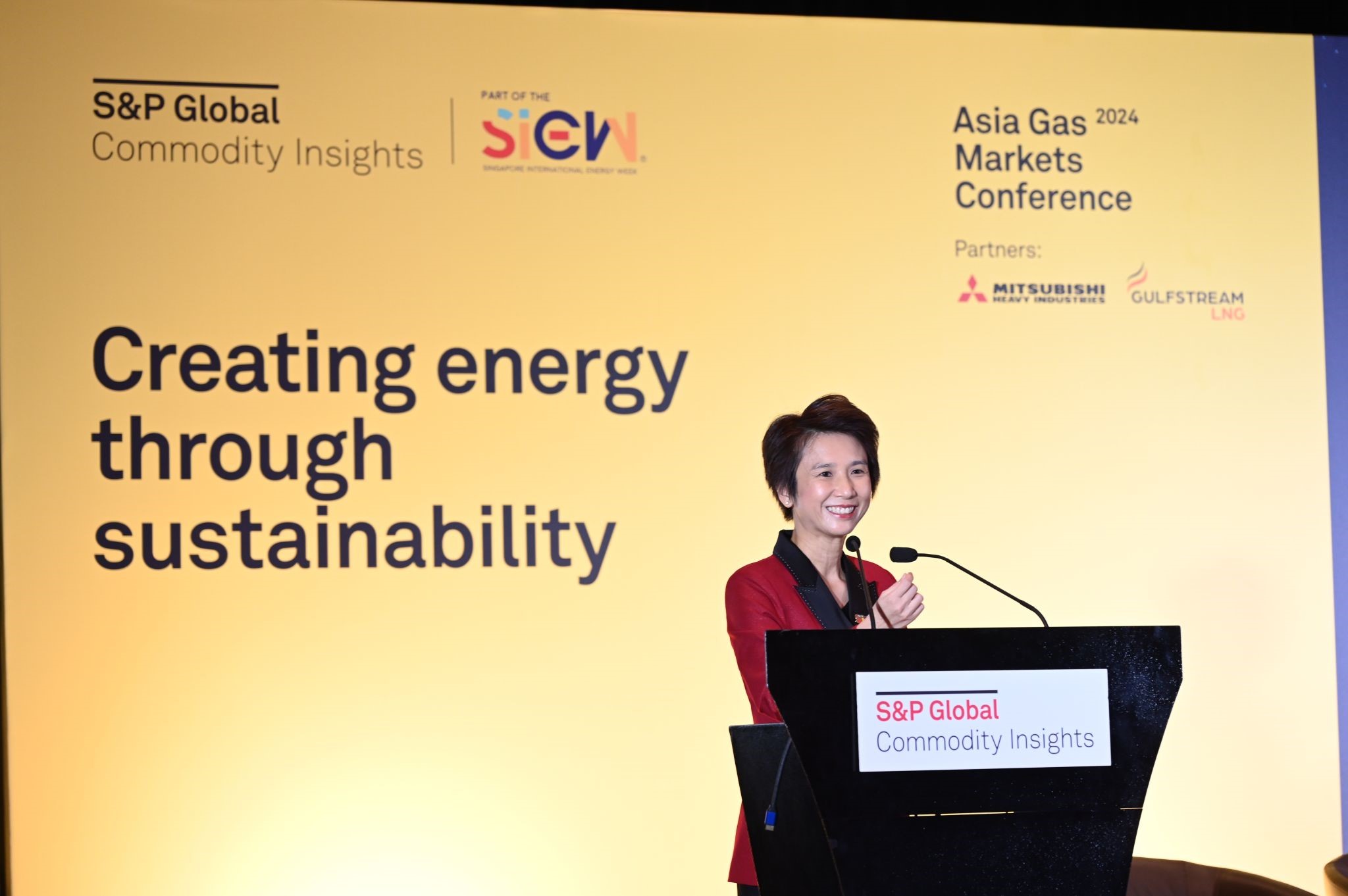
The Asia Gas Markets Conference 2024 was held in the commodities trading hub of Singapore in October in the thick of action for the LNG industry as delegates discussed wide ranging topics from decarbonization to the shadow fleet evading Russian LNG sanctions.Ongoing tensions in the Middle East have raised new concerns about energy security and these geopolitical pressures have injected significant price uncertainty into the market, Senior Minister of State, Low Yen Ling told delegates."LNG markets are also expected to remain tight towards the end of 2024 due to forecasts of a colder winter," she said in her keynote speech. "Natural gas will remain vital to countries' energy portfolios until we find an alternative low-carbon and cost-competitive energy source with an equally robust global supply chain."The conference was held in the backdrop of the Singapore government announcing the expansion of its onshore LNG terminal with a new FSRU based facility that will add 5 million mt/year or about 50% of existing regasification capacity, to meet power generation needs.Singapore announced its new state-backed centralized gas company Gasco will start procuring gas for the power sector from 2026 and bring about greater diversification of supply and economies of scale. The government also unveiled one of the world’s first state-backed initiatives to implement carbon capture for gas-based power plants during the combustion of LNG—this could be a game changer for the industry as most initiatives focus on carbon capture in the upstream and transportation processes, but most of the CO2 is emitted during combustion.An overview of LNG Market Trends in Asia showed the benchmark JKM price outlook for winter is mired with uncertainty with potential for volatility, Megan Jenkins, Associate Director, LNG, said in a market overview.She said factors influencing the JKM price outlook include cold winter in the northern hemisphere, lack of new liquefaction projects in 2024, large open market interest from investment funds in TTF and escalation of Russia-Ukraine and Middle East conflicts.Also, LNG supply growth is expected to outpace demand growth in Asia-Pacific from 2025, loosening the global market, while the exceptional heatwave that drove up incremental LNG needs in Asia in 2024 is expected to moderate next year, Jenkins said.INDUSTRY STALWARTSSeveral of the LNG industry’s top decision makers set the tone of conversations at the gas conference held by S&P Global Commodity Insights.China is set to see a double-digit year-on-year growth in LNG imports in percentage terms in 2024, Yaoyu Zhang, Assistant CEO and Global Head of LNG and New Energies at PetroChina, said. For reference China imported 71.32 million mt, or 98.4 Bcm, of LNG, in 2023.Zhang said China’s average cost of LNG imports is much higher than domestically produced gas and pipeline imports, and an LNG price of $13-$14/MMBtu is too high for power generation, particularly in the northern part where pipeline gas is available.China's gas demand is expected to grow to over 600 billion cubic meters by 2040 from about 400 Bcm presently on energy demand, YingYing Zhou, director LNG origination at Cheniere said. Cheniere is emerging as one of the world’s largest LNG suppliers."We're also spending a lot of effort in developing our climate strategy to reduce the emissions intensity of the LNG supply chain…For example, we have an ongoing collaborative program with upstream producers, midstream companies, shipping lines as well as academic institutions to quantify, monitor, report and verify the GHG emissions across the whole value chain," she added.Woodside Energy CEO Meg O'Neill said in an interview that global LNG markets are expected to grow by up to about 50% in the coming decade as China, South Asia, and Southeast Asia exhibit a strong appetite to absorb additional new supply, quelling concerns of a looming glut.NEW MARKETSSeveral new importers and exporters represented the growing LNG marketplace.Thailand’s B.Grimm is looking to import a maximum of seven LNG spot cargoes in 2025, ramp up to about 10-12 cargoes by 2028, amid firm demand, with demand of slightly under one million metric tons by 2028, Andrew Kirk, executive vice president, head of LNG Business, said."This year, the imports were on spot and were based on the JKM. Next year, we will be more than happy to enter a 12-month strip. The strip procurement will also be based on the JKM unless the country’s Energy Regulatory Commission decides otherwise," he said."There will be more buyers in the market, and the move brings with it an opportunity for better pricing," Kirk said. During the conference week, Cambodia’s Royal Group emerged as a new entrant to the market, seeking LNG suppliers for its proposed 900 MW LNG-fired power plant which will be the country’s first gas-based power project, Thomas Pianka, Division CEO for Energy, said."There is a need to take the seasonality of domestic power generation into consideration. But the demand for electricity [in Cambodia] does not really fluctuate that much and is growing strongly year on year," Pianka said.Earlier expectations of an oversupply of LNG in 2025 have faded with global LNG markets not likely to see significant supplies until 2027, around the time when more projects come online, Gregory Joffroy, senior vice president for LNG at TotalEnergies, said.Some LNG projects that were due to come on stream in the coming months or years have been delayed and that will impact gas balances, and LNG supply comes in waves because it involves massive capex, Joffroy said.

The forecasted growth for US power demand has shifted investor interest in natural gas-fired assets, putting them in a more favorable light compared to four years ago, investment bankers told audience members at the S&P Global Financing US Power Conference in Houston. Sentiment around natural gas-fired assets in the power sector has changed from four or five years ago, panelists told conference attendees on Oct. 24. Investors were weary of acquiring gas-fired plants believing the US was on the path to phase out those assets by the end of the decade. Now, with forecasts for increased demand from datacenters and artificial intelligence, in parts of the country, such as PJM and ERCOT, there is renewed interest in these generation assets. Demand growthUtility datacenter load forecast continue to push higher, Douglas Giuffre, Executive Director at S&P Global Commodity Insights, told audience members in a conference presentation. Load growth from datacenters has been "the topic of the day," Giuffre said, noting that datacenters were only sporadically mentioned by utility company in earnings calls until late 2023. Since then, utility company load forecasts for 2030 have jumped in parts of the country. For example, Dominion’s 2030 load forecast increased 42% in 2024 compared to its 2030 forecast published in 2022. The caveat is that the industry has a history of over-forecasting power demand, and data center growth is not a one-to-one growth in power demand, Giuffre said. Expansion in artificial intelligence and datacenters may offset power consumption in other areas. The growth in data centers is real though, Giuffre said. Vacancy rates of data centers in Northern Virginia have dropped 62% from their peak in 2019. S&P Global Commodity Insights estimates a 2% annual average growth rate in US electricity consumption from 2025 to 2035, representing about a 10-year growth of about 400 TWh. In the US, there has been a little bit of a deprioritization of environmental social and governance (ESG) and more acceptance of the longevity of natural gas compared to five years ago, Gregory Hort, managing director at Lazard, told conference attendees during a separate panel discussion on US power market M&A dynamics. Existing Natural Gas Assets"Four or five years ago, the sentiment was we were going to wake up in 2030 and not have any gas left," Hort said. "I think that's completely not the case anymore." "We're seeing a robust increase in our investors interest," Andrew Brennan, managing director at ArcLight said. "It’s early stage; we're seeing the underlying investor sentiment, but we're not seeing a lot of new market participants, and I think that's got to change." This turnaround in sentiment is true both of investors that have traditionally been fossil fuel friendly, as well as those that have not. If the demand growth projections pan out, the assumption is that the current project pipeline of renewable generation sources and battery storage will not be enough to meet that demand and some form of traditional power generation source will be needed to fill that gap. If natural gas-fired generation will fill in demand gap, that leads to broader growth in the gas industry, extending to natural gas pipelines and the upstream side of the industry, J.B. Oldenburg, managing director Quantum Capital Group, said. "What we're seeing now is over the last three years, the gas fleet in the US has crept up above 40% utilization rate, which is an all-time high," Oldenburg said. "We’re pulling more gas. What our L[imited] P[artnership]s are looking at, which are still very much fossil fuel friendly LPs, is how does this react throughout the entire chain, and what is the longevity of it?" If the predicted electricity demand growth materializes, those operating existing assets should have a higher value tomorrow than they do today, Oldenburg said. "I think the question is, ‘When is that tomorrow,’" Oldenburg said. "It's the energy addition, not transition, mantra that I think folks are really starting to buy into." Even limited partnerships that are not very fossil friendly have shifted their views, Matthew Willis, partner at Hull Street Energy said. "We have a LP base that is actually not very fossil fuel friendly," Willis said. "In 2020, it was very much all about renewables and a lot of uncertainty, a little bit of gas exposure. That's totally changed now even in the endowment community, which is the leading edge of ESG. The LPs have developed a much more nuanced, reasonable, realistic view of how the power sector is going to change going forward." Not all the change in investment sentiment is just because of demand growth, Willis said. There was also realization that the energy transition is difficult and will take a lot of investment. "There are all kind of uncertainties tied to that investment," Willis said. "The use of farmland for solar, all the issues around battery safety, noise, things like that really disenchanted, as well as educated, parts of the investment." New AssetsWhile the power demand outlook has renewed interest in existing natural gas assets, there are still high hurdles for new assets, namely the expense and long interconnection queues to hook new generation to the electric grid, panelists said. Long-term load forecasts vary by location. Some forecasts for Northern Virginia predict that by 2028, the data center load will be roughly equivalent to New York ISO zone J, the pricing zone for generation located in New York City. "You're going have New York City in like two suburban counties in Northern Virginia," Willis said. "It's a huge transmission challenge, and it's a huge generation challenge. "Even if we wanted to build a plant, we put an interconnection application today, we're not even sure when we find out 2027, 2028? It’s just really hard." From a sustainability standpoint, the technology sector’s desire for carbon free baseload power and its need for a substantial increase in firm power could make the economic pressure that actually gets carbon capture and storage off the ground, Hort said. Conference HighlightsLoad growth from data centers was the topic of the day, as other panel discussions also touched on demand growth nationally for power and, what that means for generation- particularly natural gas-fired generation. The conference kicked off with a one-on-one conversation with Bobby Tudor, founder and CEO of Artemis Energy Partners. Tudor highlighted the trillions of investment dollars needed to fully realize the energy transition and the central role natural gas will play not only bridging to that transition but will also play in meeting data center demand. A second one-on-one conversation was held with Thomas Jordan, chairman, president and CEO of Coterra Energy. Jordan touched on a number of topics, including Coterra’s decision to electrify its gas production operations in the Permian Basin. Another panel discussion focused on power demand and the electrification outlook in the US. S&P Global Research Analyst Dan Thompson, who specializes in data center growth, was joined by other industry experts such as Roger Kranenburg, vice-president of energy strategy and policy at Eversource and Adam Dewolf, vice-president of energy strategy at Tract, a company that work on datacenter infrastructure development. The panelists explained nuances to the overarching trend of increased data center load. In addition to high level panel discussions on meeting demand growth, which is fueling investor interest in all types of generation, there were also panels that took a deeper dive into power finance, such as two panels on day two of the conference- "Innovations in Energy Financing: The New Capital" and "Navigating the Complex Landscape of Tax Equity in US Power Finance."
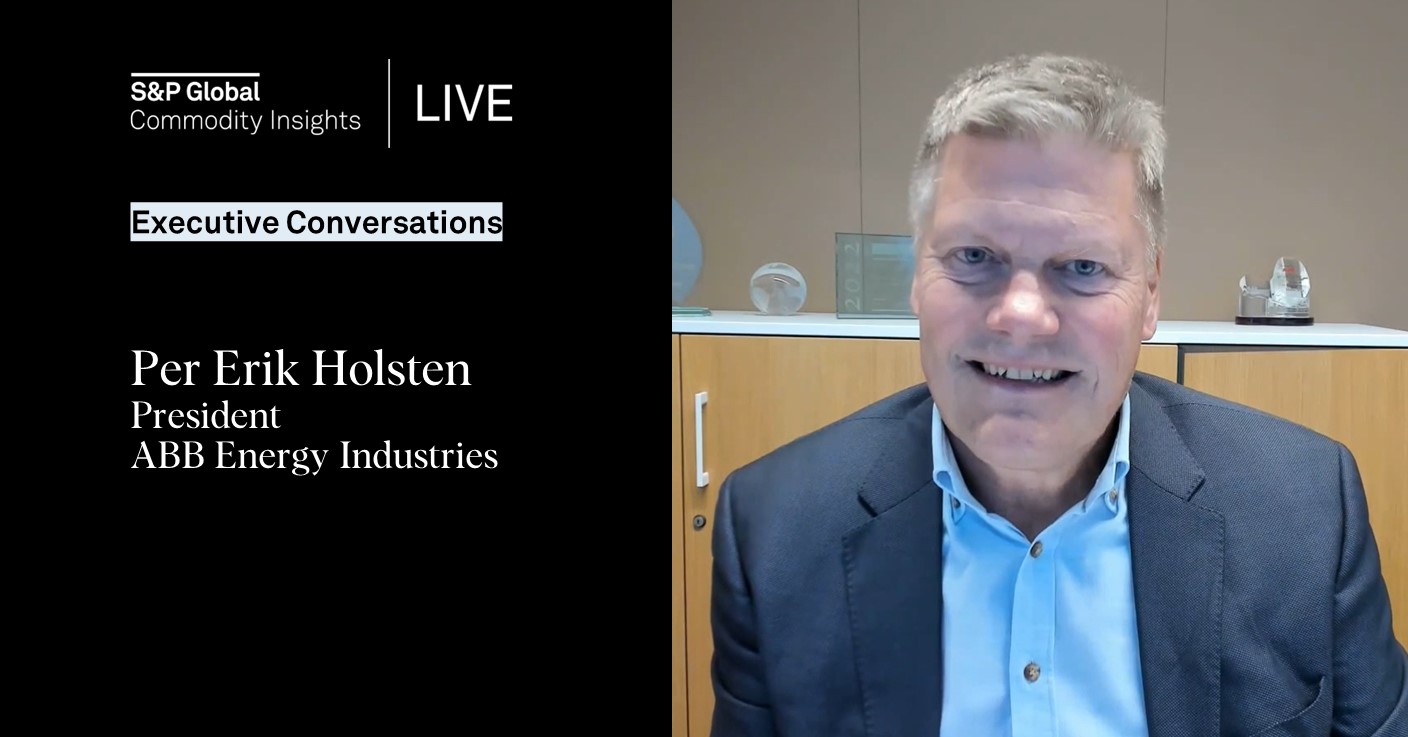
In this engaging video interview, Simon Thorne, Head of Carbon and Scenarios, and Per Erik Holsten, President of ABB Energy Industries, delve into the pivotal role of energy efficiency in decarbonizing the global economy. They explore the intricate energy trilemma—balancing security, availability, and affordability—as essential for a smooth transition away from fossil fuels without sacrificing accessibility.The discussion highlights the transformative power of digitalization, showcasing how technologies like digital twins and AI can optimize energy use and reduce emissions across industries. Holsten emphasizes ABB's commitment to proactively investing in scalable technologies, underlining the importance of tailored regional approaches to decarbonization.For those interested in the future of energy and the collaborative efforts driving the transition, this interview offers valuable insights into how local advancements can significantly impact global sustainability goals.Learn more about Executive Conversations >
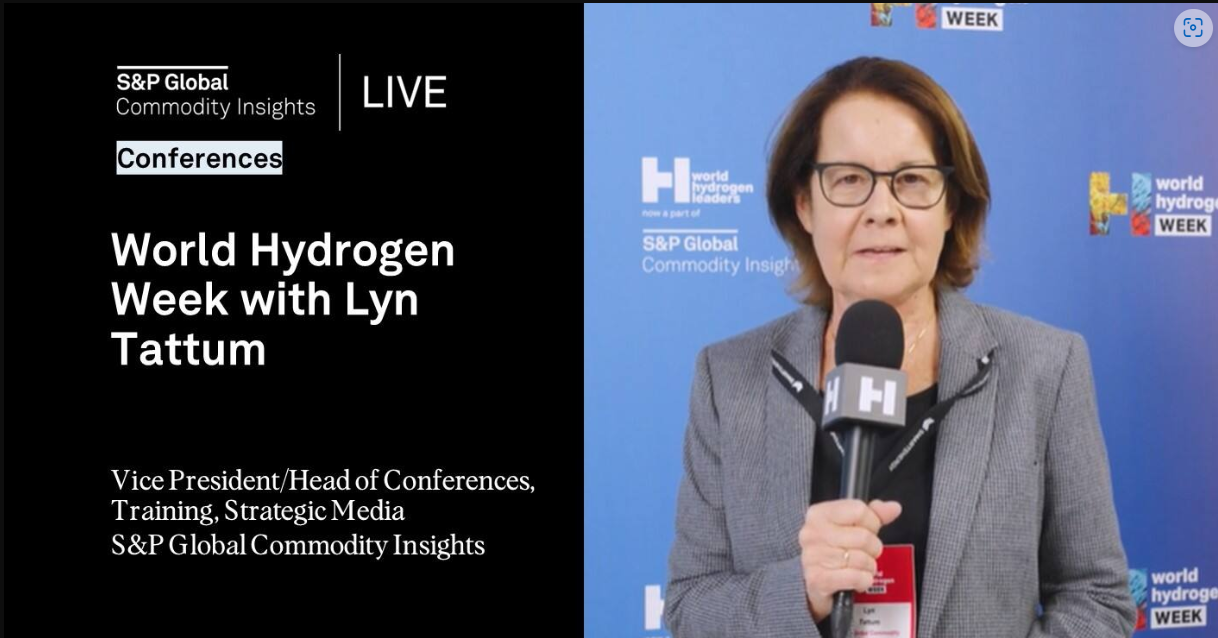
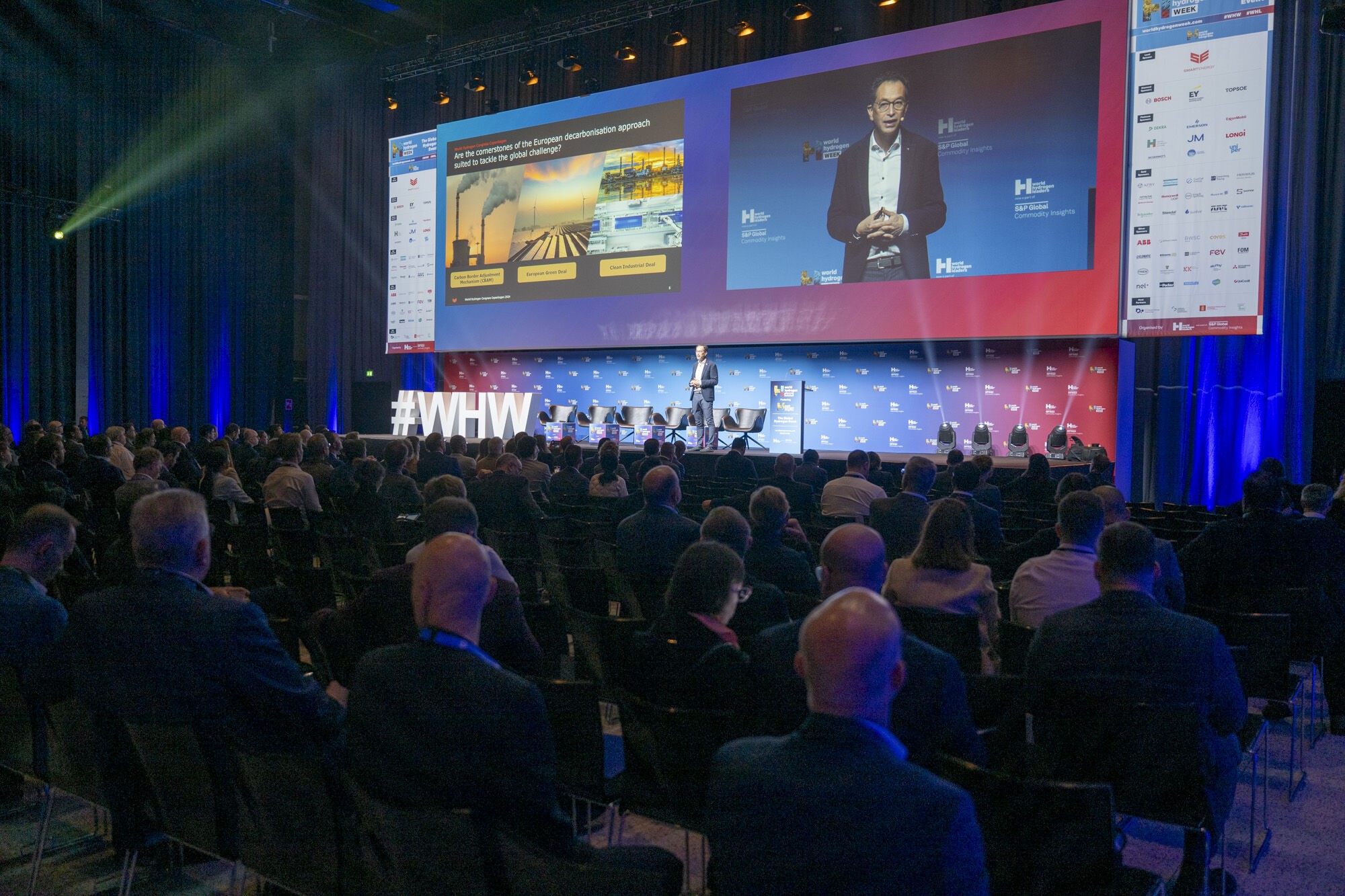
Lyn Tattum, Vice President at S&P Global Commodity Insights, takes us on a journey through the heart of World Hydrogen Week in Copenhagen, the "sustainability capital of the world." As the hydrogen sector rapidly evolves, Lyn discusses the future of this crucial fuel, its complex production and transportation, and its vital role in meeting global energy demands with clean, sustainable solutions.

Oil market delegates attending the Asia Pacific Petroleum Conference -- or APPEC 2024 -- will be seeking insights on whether mounting geopolitical turbulence and OPEC+ strategy to extend production cuts can overshadow a slowdown in demand and support prices.Additionally, the evolving landscape of global oil trading and the outlook for consumption of transportation fuels amid rising electric vehicle use will be some other topics of focus at APPEC, scheduled in Singapore over Sept. 9-12."There are multiple themes for APPEC, ranging from energy transition, decarbonization strategies, market trends and price outlooks, technological innovation, sustainable practices, as well as geopolitical influence on global energy markets," Kang Wu, global head of oil demand research at S&P Global Commodity Insights, said.For the oil markets, one of the key themes for this year's delegates will be how the oil demand and supply outlook might shape up in the near future.According to Commodity Insights, OPEC and its allies' decision Sept. 5 to extend its voluntary production cuts for two months until the end of November is seen as neutral for Brent crude prices from current levels, but short-term fundamentals remain bearish. They expect October to see a crude stock build, regardless, as refinery maintenance will cut October runs by at least 1.6 million b/d from August.The planned 190,000 b/d hike for October is now set to be a 189,000 b/d hike for December. Likewise, the additional 173,000 b/d hike for November is now set to be a sequential 207,000 b/d increase for January.The removal of these barrels from fourth-quarter balances is only a minor offset to an expected fall in refinery demand over that period. Global crude stocks will still rise.Weak refining marginsAlthough ongoing geopolitical tensions in the Middle East and OPEC+ production cuts have hardly caused feedstock supply shortfalls in Asia, refiners are now focusing on weak crack spreads and refining margins, as well as fragile oil demand, feedstock managers and middle distillate traders said."What [the] Asian refining industry is mostly worried about is high shipping insurance premiums and crude oil logistical costs eating into overall refining margins," a feedstock management source at Japan's Cosmo Oil said.Broader economic activity across major East Asian economies remains sluggish, with gasoil and petrochemical demand continuing to lag amid quiet manufacturing and construction sectors, as well as weak goods and services exports, according to middle distillate marketers and analysts.Platts, part of S&P Global Commodity Insights, assessed the second-month Singapore gasoil swap crack against Dubai crude swaps at an average of $16.77/b so far in third-quarter 2024, up from $16.53/b in Q2 but sharply below the average $22.12/b in Q1 and the 2023 average of $22.82/b.Chinese refineries' crude throughput extended a downtrend in July, falling 2% from June to a 21-month low of 13.96 million b/d, reflecting a cooling demand in Asia's biggest oil consumer after the country's gross domestic product growth slowed to 4.7% in Q2 2024.Elsewhere, Japan's real GDP growth forecast for 2024 was revised down in the July update to 0.1% from 0.5%, while Asia's fourth biggest economy South Korea saw its July industrial production undershoot expectations, falling 3.7% month on month.Demand outlookA soft response to stimulus measures, delays to petrochemicals projects, and cool and wet weather are all dampening the Chinese demand. Electrification of transportation and a troubled property market are also hitting consumption. Therefore, the country's oil demand growth would likely stay in a low gear in the near future.APPEC delegates will also be keeping a close eye on the outlook for jet fuel demand and when the market would recover fully to pre-pandemic levels.Asia's jet fuel appetite surged 430,000 b/d on the year in first-half 2024 as the region saw the sharpest rise in air travel, but signs are emerging that the demand growth may taper off in H2 as aviation demand normalizes after the pandemic.Asia's jet fuel demand growth is expected to be around 270,000 b/d in H2, which would eventually pull down the annual rate of demand growth in 2024 below 2023 levels, according to Commodity Insights.Asian jet demand growth will moderate to 361,000 b/d in 2024 from 620,000 b/d in 2023, before further easing to 190,000 b/d in 2025 due to the fading impact of aviation demand normalization, according to Commodity Insights. Regional jet fuel demand will recover to 99.5% of the 2019 level by 2025.
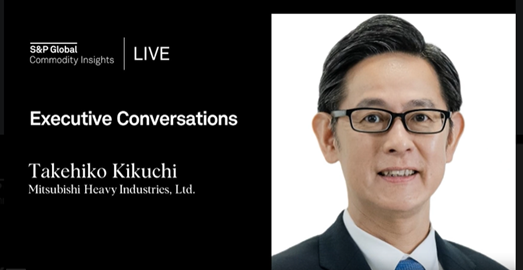
The path towards energy transition is challenging and tailored approaches are often needed to address each country’s diverse needs. Besides deploying the right energy transition and sustainable infrastructure solutions, partnerships are also essential to accelerate the adoption of alternative fuels like hydrogen, ammonia and biomass, as well as CCS solutions to support each country’s decarbonization goals. Mitsubishi Heavy Industries, Ltd. has committed to MISSION NET ZERO, a goal to achieve carbon neutrality across its entire value chain by 2040.Join Simon Thorne, Climate Energy Transformation Lead at SP Global with Takehiko Kikuchi, Senior Fellow and Chief Regional Officer for APAC and India, Mitsubishi Heavy Industries Asia Pacific Pte. Ltd. as they discuss the varied approaches provided to achieve stable, realistic and incremental energy transition in the region.
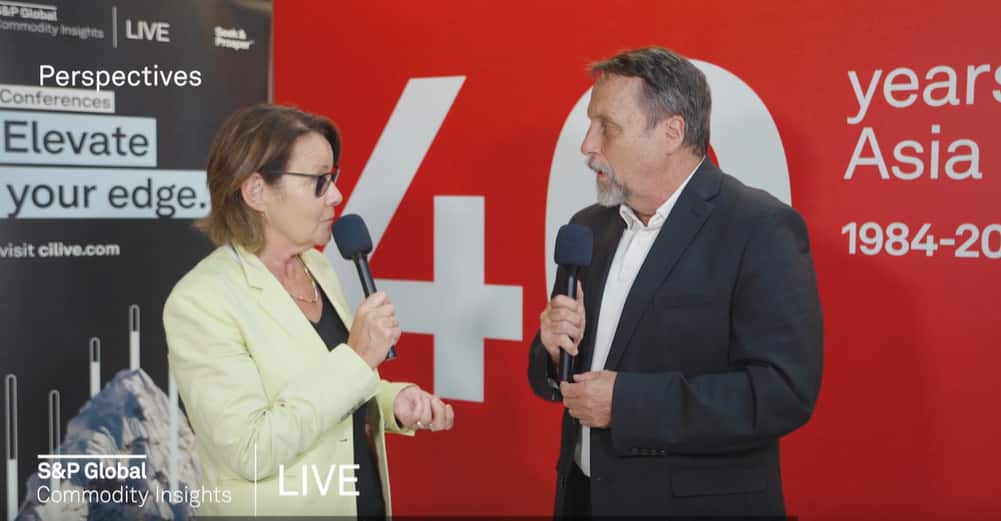
Listen as Donald Thomson, CEO of CRDC, and Lyn Tattum Vice President, Head of Events, Training and Media, S&P Global Commodity Insights discuss the formative journey of CRDC and the organization's efforts to make a difference to the environment; stressing the importance of regeneration and creating an impact through education.
MARCH | Houston, TX
Established in 1985, the World Petrochemical Conference is the premier assembly of industry leaders, global experts and government officials convening for thought-provoking dialogue and in-depth discussions around the major strategic issues facing all…
/ Commodity Insights Magazine
For two years, the OPEC+ producer alliance held 5.8 million b/d of crude oil off the market with a variety of overlapping cuts, supporting prices while jeopardizing its market share and internal unity.
/ Commodity Insights Magazine

Commodity Insights Magazine