/ Conferences
Global Power Markets Conference
April 14-16, 2025 | Las Vegas, NV
/ Conferences

/ Conferences
April 14-16, 2025 | Las Vegas, NV
/ Conferences

Guillermo Chavez, Consulting Director for Power and Renewables at SP Global Commodity Insights, discusses key insights from the Caribbean Energy Conference. The Latin American power market is experiencing significant growth driven by renewable energy expansion. At the conference, experts discussed how to balance affordable electricity, secure markets, and sustainable solutions. The region, with one of the cleanest electricity systems globally, aims to triple its renewable supply by 2050. Key challenges include infrastructure development, investment, and regulatory frameworks. Public-private partnerships and foreign investment will be crucial for achieving decarbonization at affordable prices. The region's outlook is closely tied to global energy trends and policies addressing climate change.Save the date! Caribbean Energy Conference 2026January 27-29 Rio Grande, Puerto Rico
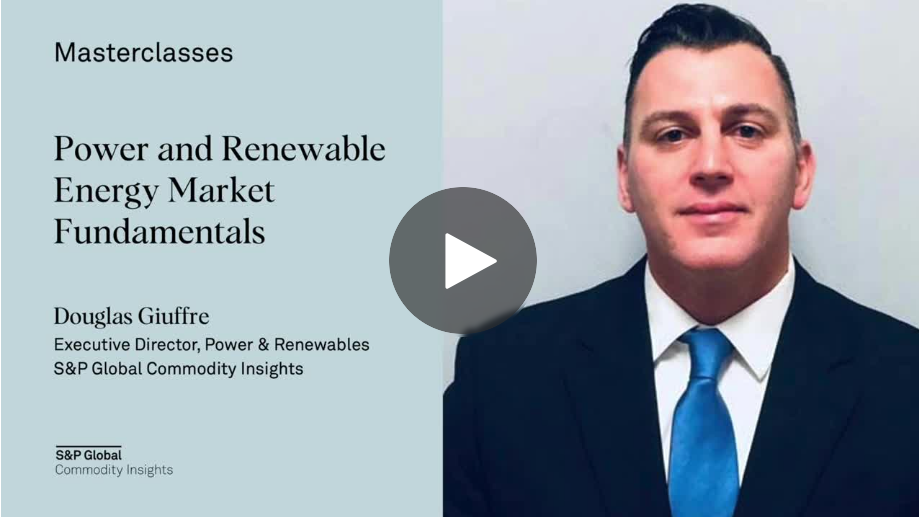
In his recent Power and Renewable Energy Market Fundamentals Masterclass, Doug Giuffre, Executive Director for Power Renewables at SP Global Commodity Insights discusses the regional nature of power markets, and why most wind development tends to be in the middle of the country, where strong wind speeds, open land area, and ease of development has allowed for the formation of the so-called Wind Belt. Want to hear more from Doug, and our other Masterclass leaders? 🔎 Find out more about Masterclasses and other member exclusive content on the World Hydrogen Leaders Platform here: https://www.worldhydrogenleaders.com/membership
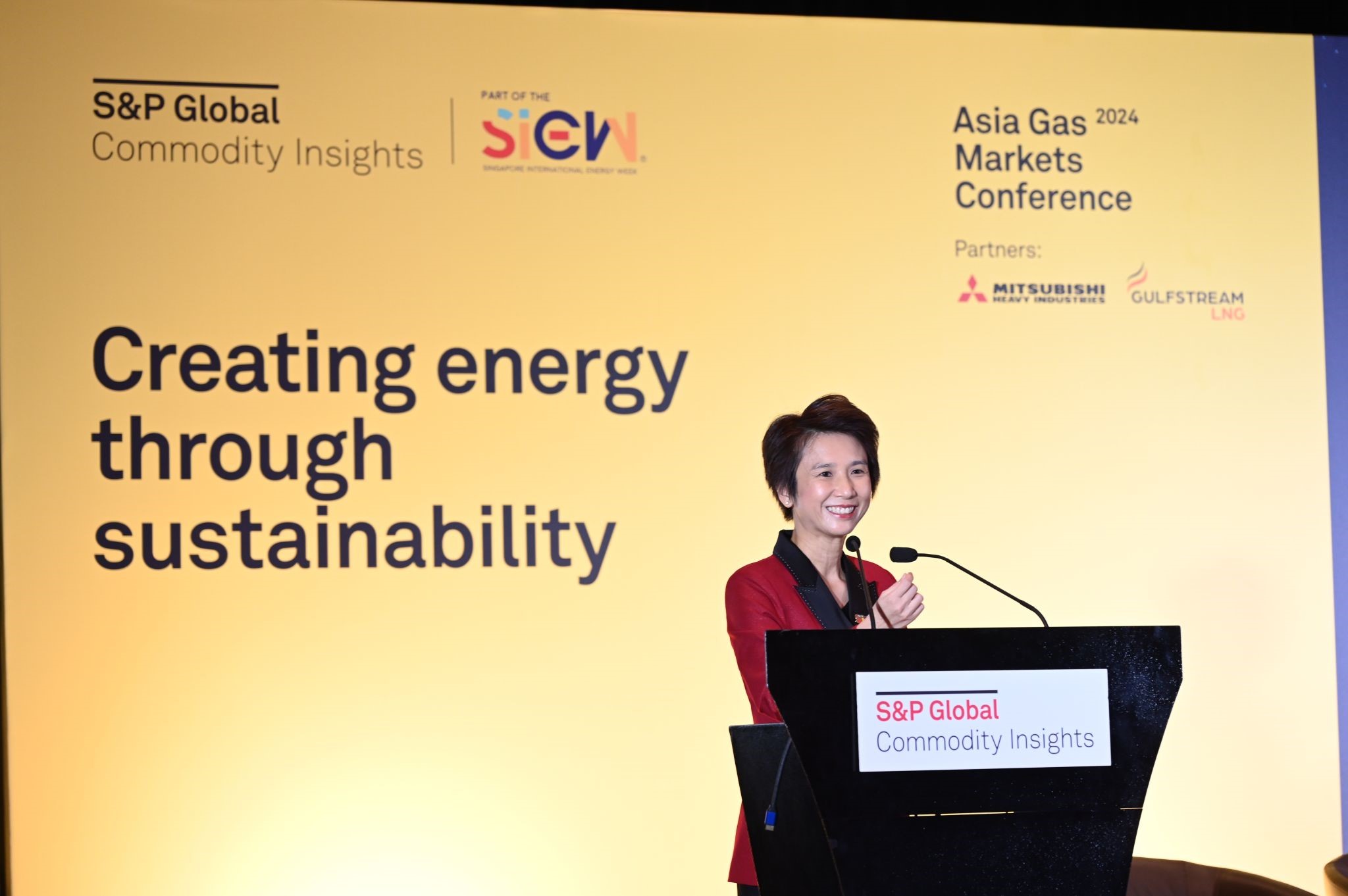
The Asia Gas Markets Conference 2024 was held in the commodities trading hub of Singapore in October in the thick of action for the LNG industry as delegates discussed wide ranging topics from decarbonization to the shadow fleet evading Russian LNG sanctions.Ongoing tensions in the Middle East have raised new concerns about energy security and these geopolitical pressures have injected significant price uncertainty into the market, Senior Minister of State, Low Yen Ling told delegates."LNG markets are also expected to remain tight towards the end of 2024 due to forecasts of a colder winter," she said in her keynote speech. "Natural gas will remain vital to countries' energy portfolios until we find an alternative low-carbon and cost-competitive energy source with an equally robust global supply chain."The conference was held in the backdrop of the Singapore government announcing the expansion of its onshore LNG terminal with a new FSRU based facility that will add 5 million mt/year or about 50% of existing regasification capacity, to meet power generation needs.Singapore announced its new state-backed centralized gas company Gasco will start procuring gas for the power sector from 2026 and bring about greater diversification of supply and economies of scale. The government also unveiled one of the world’s first state-backed initiatives to implement carbon capture for gas-based power plants during the combustion of LNG—this could be a game changer for the industry as most initiatives focus on carbon capture in the upstream and transportation processes, but most of the CO2 is emitted during combustion.An overview of LNG Market Trends in Asia showed the benchmark JKM price outlook for winter is mired with uncertainty with potential for volatility, Megan Jenkins, Associate Director, LNG, said in a market overview.She said factors influencing the JKM price outlook include cold winter in the northern hemisphere, lack of new liquefaction projects in 2024, large open market interest from investment funds in TTF and escalation of Russia-Ukraine and Middle East conflicts.Also, LNG supply growth is expected to outpace demand growth in Asia-Pacific from 2025, loosening the global market, while the exceptional heatwave that drove up incremental LNG needs in Asia in 2024 is expected to moderate next year, Jenkins said.INDUSTRY STALWARTSSeveral of the LNG industry’s top decision makers set the tone of conversations at the gas conference held by S&P Global Commodity Insights.China is set to see a double-digit year-on-year growth in LNG imports in percentage terms in 2024, Yaoyu Zhang, Assistant CEO and Global Head of LNG and New Energies at PetroChina, said. For reference China imported 71.32 million mt, or 98.4 Bcm, of LNG, in 2023.Zhang said China’s average cost of LNG imports is much higher than domestically produced gas and pipeline imports, and an LNG price of $13-$14/MMBtu is too high for power generation, particularly in the northern part where pipeline gas is available.China's gas demand is expected to grow to over 600 billion cubic meters by 2040 from about 400 Bcm presently on energy demand, YingYing Zhou, director LNG origination at Cheniere said. Cheniere is emerging as one of the world’s largest LNG suppliers."We're also spending a lot of effort in developing our climate strategy to reduce the emissions intensity of the LNG supply chain…For example, we have an ongoing collaborative program with upstream producers, midstream companies, shipping lines as well as academic institutions to quantify, monitor, report and verify the GHG emissions across the whole value chain," she added.Woodside Energy CEO Meg O'Neill said in an interview that global LNG markets are expected to grow by up to about 50% in the coming decade as China, South Asia, and Southeast Asia exhibit a strong appetite to absorb additional new supply, quelling concerns of a looming glut.NEW MARKETSSeveral new importers and exporters represented the growing LNG marketplace.Thailand’s B.Grimm is looking to import a maximum of seven LNG spot cargoes in 2025, ramp up to about 10-12 cargoes by 2028, amid firm demand, with demand of slightly under one million metric tons by 2028, Andrew Kirk, executive vice president, head of LNG Business, said."This year, the imports were on spot and were based on the JKM. Next year, we will be more than happy to enter a 12-month strip. The strip procurement will also be based on the JKM unless the country’s Energy Regulatory Commission decides otherwise," he said."There will be more buyers in the market, and the move brings with it an opportunity for better pricing," Kirk said. During the conference week, Cambodia’s Royal Group emerged as a new entrant to the market, seeking LNG suppliers for its proposed 900 MW LNG-fired power plant which will be the country’s first gas-based power project, Thomas Pianka, Division CEO for Energy, said."There is a need to take the seasonality of domestic power generation into consideration. But the demand for electricity [in Cambodia] does not really fluctuate that much and is growing strongly year on year," Pianka said.Earlier expectations of an oversupply of LNG in 2025 have faded with global LNG markets not likely to see significant supplies until 2027, around the time when more projects come online, Gregory Joffroy, senior vice president for LNG at TotalEnergies, said.Some LNG projects that were due to come on stream in the coming months or years have been delayed and that will impact gas balances, and LNG supply comes in waves because it involves massive capex, Joffroy said.

The forecasted growth for US power demand has shifted investor interest in natural gas-fired assets, putting them in a more favorable light compared to four years ago, investment bankers told audience members at the S&P Global Financing US Power Conference in Houston. Sentiment around natural gas-fired assets in the power sector has changed from four or five years ago, panelists told conference attendees on Oct. 24. Investors were weary of acquiring gas-fired plants believing the US was on the path to phase out those assets by the end of the decade. Now, with forecasts for increased demand from datacenters and artificial intelligence, in parts of the country, such as PJM and ERCOT, there is renewed interest in these generation assets. Demand growthUtility datacenter load forecast continue to push higher, Douglas Giuffre, Executive Director at S&P Global Commodity Insights, told audience members in a conference presentation. Load growth from datacenters has been "the topic of the day," Giuffre said, noting that datacenters were only sporadically mentioned by utility company in earnings calls until late 2023. Since then, utility company load forecasts for 2030 have jumped in parts of the country. For example, Dominion’s 2030 load forecast increased 42% in 2024 compared to its 2030 forecast published in 2022. The caveat is that the industry has a history of over-forecasting power demand, and data center growth is not a one-to-one growth in power demand, Giuffre said. Expansion in artificial intelligence and datacenters may offset power consumption in other areas. The growth in data centers is real though, Giuffre said. Vacancy rates of data centers in Northern Virginia have dropped 62% from their peak in 2019. S&P Global Commodity Insights estimates a 2% annual average growth rate in US electricity consumption from 2025 to 2035, representing about a 10-year growth of about 400 TWh. In the US, there has been a little bit of a deprioritization of environmental social and governance (ESG) and more acceptance of the longevity of natural gas compared to five years ago, Gregory Hort, managing director at Lazard, told conference attendees during a separate panel discussion on US power market M&A dynamics. Existing Natural Gas Assets"Four or five years ago, the sentiment was we were going to wake up in 2030 and not have any gas left," Hort said. "I think that's completely not the case anymore." "We're seeing a robust increase in our investors interest," Andrew Brennan, managing director at ArcLight said. "It’s early stage; we're seeing the underlying investor sentiment, but we're not seeing a lot of new market participants, and I think that's got to change." This turnaround in sentiment is true both of investors that have traditionally been fossil fuel friendly, as well as those that have not. If the demand growth projections pan out, the assumption is that the current project pipeline of renewable generation sources and battery storage will not be enough to meet that demand and some form of traditional power generation source will be needed to fill that gap. If natural gas-fired generation will fill in demand gap, that leads to broader growth in the gas industry, extending to natural gas pipelines and the upstream side of the industry, J.B. Oldenburg, managing director Quantum Capital Group, said. "What we're seeing now is over the last three years, the gas fleet in the US has crept up above 40% utilization rate, which is an all-time high," Oldenburg said. "We’re pulling more gas. What our L[imited] P[artnership]s are looking at, which are still very much fossil fuel friendly LPs, is how does this react throughout the entire chain, and what is the longevity of it?" If the predicted electricity demand growth materializes, those operating existing assets should have a higher value tomorrow than they do today, Oldenburg said. "I think the question is, ‘When is that tomorrow,’" Oldenburg said. "It's the energy addition, not transition, mantra that I think folks are really starting to buy into." Even limited partnerships that are not very fossil friendly have shifted their views, Matthew Willis, partner at Hull Street Energy said. "We have a LP base that is actually not very fossil fuel friendly," Willis said. "In 2020, it was very much all about renewables and a lot of uncertainty, a little bit of gas exposure. That's totally changed now even in the endowment community, which is the leading edge of ESG. The LPs have developed a much more nuanced, reasonable, realistic view of how the power sector is going to change going forward." Not all the change in investment sentiment is just because of demand growth, Willis said. There was also realization that the energy transition is difficult and will take a lot of investment. "There are all kind of uncertainties tied to that investment," Willis said. "The use of farmland for solar, all the issues around battery safety, noise, things like that really disenchanted, as well as educated, parts of the investment." New AssetsWhile the power demand outlook has renewed interest in existing natural gas assets, there are still high hurdles for new assets, namely the expense and long interconnection queues to hook new generation to the electric grid, panelists said. Long-term load forecasts vary by location. Some forecasts for Northern Virginia predict that by 2028, the data center load will be roughly equivalent to New York ISO zone J, the pricing zone for generation located in New York City. "You're going have New York City in like two suburban counties in Northern Virginia," Willis said. "It's a huge transmission challenge, and it's a huge generation challenge. "Even if we wanted to build a plant, we put an interconnection application today, we're not even sure when we find out 2027, 2028? It’s just really hard." From a sustainability standpoint, the technology sector’s desire for carbon free baseload power and its need for a substantial increase in firm power could make the economic pressure that actually gets carbon capture and storage off the ground, Hort said. Conference HighlightsLoad growth from data centers was the topic of the day, as other panel discussions also touched on demand growth nationally for power and, what that means for generation- particularly natural gas-fired generation. The conference kicked off with a one-on-one conversation with Bobby Tudor, founder and CEO of Artemis Energy Partners. Tudor highlighted the trillions of investment dollars needed to fully realize the energy transition and the central role natural gas will play not only bridging to that transition but will also play in meeting data center demand. A second one-on-one conversation was held with Thomas Jordan, chairman, president and CEO of Coterra Energy. Jordan touched on a number of topics, including Coterra’s decision to electrify its gas production operations in the Permian Basin. Another panel discussion focused on power demand and the electrification outlook in the US. S&P Global Research Analyst Dan Thompson, who specializes in data center growth, was joined by other industry experts such as Roger Kranenburg, vice-president of energy strategy and policy at Eversource and Adam Dewolf, vice-president of energy strategy at Tract, a company that work on datacenter infrastructure development. The panelists explained nuances to the overarching trend of increased data center load. In addition to high level panel discussions on meeting demand growth, which is fueling investor interest in all types of generation, there were also panels that took a deeper dive into power finance, such as two panels on day two of the conference- "Innovations in Energy Financing: The New Capital" and "Navigating the Complex Landscape of Tax Equity in US Power Finance."

US-based hydrogen sector developers are considering which renewable procurement strategies will align with both domestic and international standards for electricity sourcing amid proposed Inflation Reduction Act rules by the US government. >Producers in the hydrogen sector have highlighted the increasing popularity of integrated projects to facilitate adherence to a stronger global regulatory environment.The drafted guidelines for the IRA 45V Production Tax Credits regulation for hydrogen announced Dec. 22, 2023, by the US Treasury and Internal Revenue Service may add barriers to adopting low-carbon hydrogen, slowing investments in hydrogen production, reducing affordability and stifling market growth, according to an S&P Global Commodity Insights analysis.Developers of electrolysis-based "green" hydrogen and its derivatives are exploring provisional options to secure renewable energy and comply with additionality criteria, despite generous subsidies for low-carbon hydrogen production.Before the introduction of the draft IRA rules, many electrolysis-based projects planned to connect to the grid and meet electricity demand. However, with the current rules designed to ensure that subsidized hydrogen production avoids increasing emissions -- especially from the electric grid -- dedicated renewables are becoming a more common approach. Developers view integrated projects as an option that effectively meets the three pillars approach while reducing the challenges that come with the presence of transmission bottlenecks and grid connections.Large-scale US projects exporting hydrogen to Europe have clarity on the EU delegated Act and additional criteria for renewable hydrogen generation. However, a lack of clarity on production in the US may cause delays in financing and final investment decision for hydrogen developers.Electrolysis projects that plan to use grid power are currently not viable for investment without the final rules, resulting in significant delays in project development. However, integrated projects that utilize dedicated or "islanded" renewable-powered electrolysis can potentially proceed, although they still encounter technical and contractual challenges without subsidies for grid-powered electrolysis, according to Commodity Insight analysts.Producers mull grid-connected option for tax credits A leading electrolysis-based hydrogen developer in the US told Commodity Insights May 30 they would continue forth with their plan of using a blend of electricity from the grid and from a power purchase agreement that sources renewable energy with the environmental attribute attached until directed otherwise by the final IRA rules.The developer intends to achieve a lower carbon intensity score by matching their energy consumptions on a one-on-one basis with renewable energy credits. The developer and other sources are considering an alternative approach by oversizing their wind/solar PPAs and optimizing operations based on grid prices -- per the draft rules, this strategy would only be viable if it were to meet the three pillars.As current policies stipulate additional renewable procurement for green hydrogen production, behind-the-meter projects will be a more established approach for sourcing electricity, a renewables developer told Commodity Insights at the World Hydrogen North America Conference, adding that integrated renewable energy development that are co-located with hydrogen projects is the most common practice he sees in the market.The colocation of renewables and the absence from the grid is intended to avoid basis risk in deliverability of energy in times of low grid capacity, grid connection queues and associated costs, the renewables developer added.Developers are facing the challenge of proceeding with their initial energy sourcing strategy and hoping it aligns with policy when finalized. However, some projects are evaluating the economic viability of constructing dedicated renewable assets on site to meet the additionality criteria.Regulation effects on hydrogen, derivatives The draft rules of the IRA received substantial feedback of approximately 30,000 comments from market participants, and some comments argued that facilitating grid connections and grid-based electricity consumption would expedite hydrogen production in the initial years, resulting in cost reductions.Michael Wheeler, Vice President of Government Affairs at Intersect Power, said in the company's comment on the Treasuries Draft rules that "regulations should promote development of hydrogen facilities that will be able to continue to operate in the long-term after any tax incentives are phased out."Wheeler said after the incentives, hydrogen projects would retire, as they would be too financially dependent on government support for offsetting costs that result from the hourly matching requirement.New Fortress Energy said the 45V draft rules "will significantly limit clean hydrogen adoption in the US, delay the Biden Administration's decarbonization efforts, and eliminate the potential for millions of jobs that the clean hydrogen market could generate."The company currently has a project to produce electrolysis-based hydrogen, which it will supply to OCI's green ammonia plant in Beaumont, Texas.OCI said it plans to take advantage of the program in the US, along with EU production guidelines, which both have CO2 costs built into dashboards, allowing for more international standardization for hydrogen projects, Vice President of Global Sustainability at OCI, Hanh Nguyen, said at the World Hydrogen North America conference.

After decades of slow load growth, surging power demand from electrification of the US economy in a context of increased technical and environmental pressures poses multiple challenges for power markets and utilities, executives said April 16.Some of the executives, speaking at the S&P Global Commodity Insights Global Power Markets event in Las Vegas, suggested ways of meeting those challenges include improved and expanded generation and transmission technology.From about 1990 to about 2007, load growth in the Lower 48 states averaged about 2% a year, said Douglas Giuffre, senior director for North American power markets analysis at S&P Global Commodity Insights, but in the wake of the Great Recession, load growth slowed to about 0.2% a year, as energy efficiency efforts bore fruit.Combining utility projections with consultants employed by regional transmission organizations, "they had consistent load forecasts that over-projected," Giuffre said.The North American Electric Reliability Corporation noticed this and revised its projected load growth percentages downward to about 0.5% in 2022, but more than doubled that projection in 2023 to about 1.2%, partly because of surging demand from data centers, Giuffre said."For many parts of the country, this is a dramatic shift from where load growth had been to know what's expected to come," Giuffre said. "And this is going to require a lot of utilities and RTOs to kind of wrestle with this question: How do you manage to meet this potentially rapidly growing demand that we just haven't seen? … What has changed, clearly, is the sudden discussion of data centers."Data centers currently consume about 185 TWh a year, "the equivalent to all the residential electricity consumption in Florida and New York today." Across the various RTOs, data center load is projected to add about 250 TWh, "the equivalent of adding Texas and California residential load," Giuffre said.'An uptick in gas' Such surging demand cannot reliably be served, at least in the short term, without adding natural gas-fired generation, Giuffre said."Natural gas had been obviously for quite some time a leading resource in the market, but we're likely to be at a 25-year low in terms of new gas additions this year," Giuffre said. However, S&P Global researched the integrated resource plans of several utilities, and "what we’re seeing is an uptick in gas either to replace existing coal-fired generation or as peaking capacity to support renewables."Vincent Sorgi, president and CEO of PPL, the Allentown, Pennsylvania-based utility holding company, said, "The key to the clean energy transition and getting renewables deployed at scale is natural gas.""Batteries right now are significantly more expensive than building new natural gas, and the new natural gas units are incredibly efficient," Sorgi said during a "fireside chat" with Xizhou Zhou, vice president of the Gas, Power and Climate Solutions group at S&P Global."I think, in general, politicians understand the value of natural gas so they seem to be a lot more amenable" to allowing its growth, Sorgi said, particularly if it is combined with carbon capture and sequestration or alternative fuels such as renewable natural gas or hydrogen."So, I think you’ll continue to see that in integrated utilities … for more fossil generation," Sorgi said.Cindy Crane, CEO of PacifiCorp, the Portland, Oregon-based utility holding company, said her company has proposed gas-fired generation to some utility regulators "under the condition that they’re capable to convert to hydrogen.""We are saying that those are needed to bring that reliability for a longer term in our system," Crane said.PacifiCorp is also pursuing nuclear power development in the form of a 385-MW small modular reactor pilot project with Bill Gates’ TerraPower, with groundbreaking schedule for June 10 in Caspar, Wyoming, Crane said.Transmission expansion PacifiCorp has also embarked on a 20-year transmission expansion plan involving 345 kV and 500 kV lines estimated to cost about $12 billion, with to of the larger segments resulting in a high-voltage network of more than 1,100 miles of line."Then, we have several hundred miles more that are scheduled to be coming online between 2025 and 2028," Crane said.Doug Cannon, president and CEO of NV Energy, which serves significant load centers in Las Vegas, Reno and Carson City, said his company is building more than high-voltage lines along the state’s western border to Reno, east across the middle of the state to Ely and then south to link up with NV Energy’s existing grid."What you're going to see if you picture Nevada, there's going to be a giant 500-kV triangle that goes around the entire state that is going to improve reliability for our customers [and] dispatch our system in a more efficient way, dropping energy costs for customers," Cannon said. "It's also going to open up a lot of area that previously could not be developed for renewable energy. There's tremendous solar potential along the west side of the state of Nevada, where there was no transmission. In addition, in the center part of the state, there's more solar potential, as well as improve the geothermal potential."

Listen now as Sam HuntingtonDirectorNorth American Power and Renewables TeamSP Global Commodity Insights sheds light on power markets from the Global Power Markets conference 2024. Watch now to learn all about the quest for dispatchable, long-duration resources, serving emerging large loads and managing future power demand.Want more? Watch the rest in the series:Global Power Markets with Daryna KotenkoGlobal Power Markets with Mason Lester

Ahead of the upcoming Global Power Markets Conference in Las Vegas, listen to Vice President of Clean Hydrogen Market Development at Constellation Energy Dwayne Pickett and Energy Transition Reporter Daniel Weeks in a discussion of how the nascent hydrogen industry could be affected by tax credits and increased power demand.For more coverage of Global Power Markets Conference, go to https://cilive.com/conferences

Chris Davy, deputy assistant secretary with the US Department of State’s Office of Energy Transformation, discusses the challenges to investing in the energy transition in the Caribbean and the resources developers are looking at to drive the transition away from fossil fuels.

In a highly unusual move, Arizona utility regulators ordered their staff to draft new rules that would repeal the state's existing mandates for renewable energy and energy efficiency.The Feb. 6 order by the Arizona Corporation Commission, approved by a 4-1 vote at an open meeting, sets the Republican-led state apart from most other jurisdictions across the country, which are pushing utilities to source electricity from emissions-free sources.According to the Energy Information Administration, as of November 2022, 36 states and the District of Columbia had established renewable portfolio standards. In Arizona's case, the ACC first established the state's renewable energy standard and tariff in 2006. That standard requires regulated utilities to obtain 15% of their power from renewables no later than 2025.But the mandates have become unpopular with some Republicans, who claim the rules are raising prices for utility ratepayers since the costs utilities incur to comply with the rules are passed on to customers.In a joint press release Feb. 8, ACC Chairman Jim O'Connor and Commissioner Kevin Thompson claimed that the REST mandate has cost ratepayers about $2.3 billion since it was implemented in 2006.O'Connor said that at the time the REST rules were approved, then-Chairman Jeff Hatch-Miller promised that the commission would review the rules every year to ensure they remained in ratepayers' best interest. "Those reviews never occurred, and costs were never considered," O'Connor claimed.O'Connor also said that utilities often ended up acquiring power above market prices to comply with the renewables mandate. "Mandates distort market signals and are not protective of ratepayers," he claimed.The repeal of the REST rule has concerned some renewable developers, who say the action is part of a broader campaign in Arizona against renewable development by industry opponents.Speaking remotely to the Feb. 6 ACC meeting, Autumn Johnson, executive director of the Arizona Solar Energy Industries Association, claimed that "a half-dozen" bills have been proposed in the state legislature, "all intended to make it harder or more expensive to build utility-scale renewables." She also said that three local jurisdictions in the state have imposed moratoria or limits on new renewable projects."I worry that, on top of all of this, the only state in the country to repeal what is already an extremely modest RPS sends the wrong signal to the industry," Johnson said. "It says, 'Take your business and your jobs and your dollars elsewhere.'"In addition to the REST mandate, the ACC's order also calls for revoking efficiency rules for both electric and gas utilities. Those rules, which went into effect in 2010, have cost ratepayers just under $1.1 billion to date, according to O'Connor and Thompson."Living in Arizona, we all should be mindful to practice energy efficiency," Thompson said. "But too much focus has been placed on societal metrics and costly feel-good programs that don't prioritize ratepayer affordability and grid reliability."He added: "Once the mandates are removed, it will be incumbent upon Arizona's utilities to propose programs that actually work to benefit ratepayers and protect the integrity of our grid."In their statement, the two commissioners said the process of revoking the rules could take over a year due to a requirement for public comment and the need to submit the action for review by other state agencies.
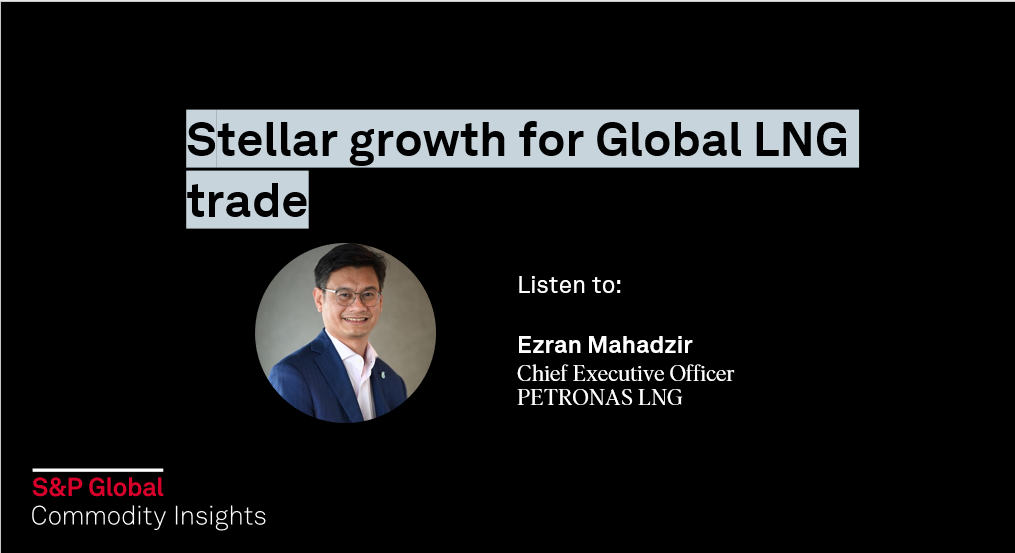
Global LNG trade witnessed a stellar growth in 2022, driven particularly by European demand as Russia's invasion of Ukraine meant sanctions resulting in, among other things, the sudden loss of pipeline gas. Emerging nations were also actively seeking cargoes for their soaring energy needs. The tight supply led to an unprecedented price volatility, causing significant demand destruction. What does the future hold for LNG markets and will the price volatility persist? How will Petronas LNG steer through? Petronas LNG CEO Ezran Mahadzir shares his views with SP Global Commodity Insights Senior Editor Surabhi Sahu to answer these and other questions critical to global LNG trade.How would you describe the dynamics in the LNG market over the past two years, particularly after Russia's invasion of Ukraine? Do you expect the price volatility to persist?Before the Russia-Ukraine war, we went through COVID-19 lockdowns. That was also a shift. When the Ukraine crisis emerged, there wasn't enough supply to meet demand because prior to that, the price signals did not incentivize investments.Being a long-term player in the LNG industry, we would like to see more stable LNG prices, which allow investments, and [prices that] are not too high to cause demand destruction. However, the market is expected to stay volatile in the medium term -- until new projects come toward 2026-27, with the Qatari expansion and new US Gulf projects.The volatility makes it very difficult to predict prices but certainly I do not think they will be at the pre-COVID levels of $7-$8/MMBtu.We also don't know to what extent the Israel-Gaza conflict would escalate. If new actors came in, you might see prices shoot up from present levels.Given present storage inventory levels, it appears Europe is well prepared for the winter season. Inventory levels in North Asia are also healthy. We must commend the European market, both policy makers and players, for the speed at which they have increased capacity.But a prolonged harsh weather could potentially trigger more spot market price volatility. To cope with demand and supply shocks, participants should focus on assessing that risk and strategize to mitigate disruptions.It is also important for end-buyers to look at the situation from a long-term perspective. At the end of the day, energy security is still key.Are shipping restrictions at the Panama Canal posing risks for Asian supply? How are players mitigating risks?On the Pacific side, enough supply sources exist to meet current demand, particularly the historical long-term requirement of Japan and South Korea. However, with demand growth, supply to the market has become and is still slightly scarce.That's where we, via our position in Bintulu, provide a competitive advantage because we are directly facing those markets. We don't have the risk of the Panama Canal and the region we're in is stable in terms of geopolitics.Meanwhile, the challenges posed by the waterway have caused an uptick in LNG cargo swapping among industry players to trim risks in a volatile market as lack of investments amid growing LNG demand, uncertainty over severity of Northern Hemisphere winter and geopolitical risks lurk.Related contentNews: LNG freight rates from US Gulf Coast to NWE, Asia weaken as demand lagsPodcast: The wait is (still) on at the Panama CanalAt the end of day, irrespective of Panama Canal challenges, players should optimize their portfolio by collaborating in different ways including by swapping cargoes. Any cost savings will not only be advantageous for suppliers but will also benefit the market.What kind of indexation would you favor when it comes to pricing LNG contracts?I think that really depends on the market. Historically, LNG was always a conversion fuel to all.In the company's traditional markets -- Japan, South Korea and even China -- the indexation formulas are still oil-linked, as opposed to TTF, Henry Hub, NBP in a much more liquid Atlantic market.We are flexible so long as the prices and formula would allow a fair risk and reward, and the risks can be managed by all related parties. The formula we bring in is very much a two-way formula to solve various issues along the way.Southeast Asia is certainly a region where we would not only like to participate in but also become a dominant supplier. The burgeoning population, economic size, need for energy and thrust on decarbonization policies in Southeast Asia means that it will be taking in more LNG and, given our geographical location, Petronas is able to supply LNG cargoes on a competitive basis.How does Petronas see LNG's growth potential and what are some of the projects that you are excited about in this space?In the medium and long term, we believe that the gas market will grow because it is the cleanest hydrocarbon source and a very good energy transition fuel. At the right price signals, the market will invest in future capacities.Petronas has taken a final investment decision on a new project in Sabah -- ZLNG -- to bring in 2 million mt/year of LNG capacity by the second half of 2027.We are quite excited about getting out our first cargo from LNG Canada. That should happen in the second half of 2024 as part of a commissioning program. There are also further opportunities to grow LNG Canada and we are in discussions to progress phase 2.Separately, Petronas is in discussions with Argentina's YPF for a proposed LNG plant. If done properly, that could be a game changer for the world market.Petronas also has an offtake contract with two parties in the US Gulf -- Cheniere and Venture Global.Having new supply nodes allows us to further strengthen our portfolio globally. We can draw upon our experiences from the Pacific and apply it to the Atlantic.How does Petronas view LNG bunkering prospects, given the push toward zero-carbon marine fuels?We believe that the LNG bunkering market will grow. Our Pengerang regasification terminal provides a platform for reload and LNG bunkering operations. We also have a regasification terminal in Sungai Udang, Melaka, that can do reloads for LNG bunkering. We have a dedicated LNG bunkering vessel that plies in the Strait of Malacca, among the busiest shipping lanes in the world.How is Petronas taking steps to harness cleaner LNG as it accelerates its energy transition journey?It's important to distinguish between carbon abatement and actual carbon reduction. Carbon neutral LNG by buying carbon credits is an abatement process and we do that, having traded about six carbon neutral LNG cargoes, while also focusing on carbon footprint reduction.At LNG Canada, the molecule itself has low carbon because it is shale gas. Along with partners, we are developing it to be among the lowest emissions LNG plant by using electrification and efficient gas turbines.Upon completion in 2024, the Petronas LNG Complex in Bintulu will also begin shifting from old gas turbines to electrification from hydro. In addition, the company's LNG vessels are modern, fitted with new technologies and more efficient.On the upstream side, Petronas has also taken an FID on the Kasawari carbon sequestration project offshore Sarawak. The project, which should come online in 2026, will result in about 3.3 million mt/year of CO2 capture, making it one of the largest carbon capture and storage projects worldwide.
Alex Klaessig, Senior Director, Hydrogen and Renewable Gas Forum at SP Global Commodity Insights, explores the potential impact of clean hydrogen in different sectors, from transportation and electric power to chemical feedstocks and industrial heat. Finally, Alex addresses how hydrogen developers in the US view the Inflation Reduction Act (IRA) as they await the final guidance.Conferences LIVE
Listen now as Manoj Sinha, Co-Founder and CEO, Husk Power Systems discusses nominations for the Global Energy Awards Energy Transition - Power Finalist award! For a quarter century, we have been honored to recognize the energy sector’s exponential growth and rapid progress. As the world comes together to tackle climate change issues at COP28, we are gathering the industry to acknowledge the companies and individuals working on the crucial, innovative, practicable solutions that will solve those problems. Shine a spotlight on your organization’s accomplishments and join us this December 7th in New York City, USA to celebrate the many achievements and successes of the global energy community. Learn more now

As US power market participants grapple with recent offshore wind industry challenges, there is expectant optimism about the US Inflation Reduction Act shifting to a more actionable phase for investors as further guidance around tax credits emerges, which could help foster a long-term growth trend for distributed energy generation and associated infrastructure, experts said Oct. 30.With offshore wind projects across the US Northeast struggling due to higher costs than when power purchase agreements were signed, New York regulators in October dismissed a request by several developers to raise the contracted offtake price they accepted in their contracts following competitive solicitations."I work in a world where there is some dissonance going on at the moment," Doreen Harris, president and CEO of the New York State Energy Research and Development Authority, said during the S&P Global Financing US Power Conference that was held in New York City.New York’s landmark climate law, the Climate Leadership and Community Protection Act, mandates 100% zero-emissions power by 2040 and a big part of meeting that target is predicated on 9 GW of offshore wind power capacity by 2035.The development pipeline for those offshore wind projects was moving ahead fairly smoothly until armed conflict in Europe rippled through global energy markets, Harris said, with significant impacts in New York on things like supply chain costs and bottlenecks. "As policymakers we recognize that we have to create that durable market signal in order for the markets to invest and that’s really what New York’s climate law has done," she said. The scoping plan for how to enact the climate law considered "massive load growth – a doubling of our load in the state over the coming decades" and reliance on a 15 GW of zero-emissions dispatchable resources to balance out the renewable generation, Harris said.The state had built up a 14-GW portfolio of projects that signed power delivery contracts with NYSERDA that would have gotten the state very close to another of its goals which is to have 70% renewable power by 2030. The global energy crisis of the past few years impacted New York projects due to increases in inflation, supply chain constraints and interest rate volatility that caused problems for project developers, Harris said.This resulted in most of that 14 GW pipeline of projects seeking to renegotiate their contract terms. "We as a state are making quick work to assess the status of these pipeline projects to determine which could advance, which will not and ultimately backfill any gaps lost through attrition of that portfolio," she said. There is a proceeding underway at the New York Public Service Commission into what constitutes a zero-emissions dispatchable resource and what policies will be needed to build them.That proceeding will be "critical" and will "set the stage for the next decade of investments past 2030 … and the massive amount of electrification that will come with it," Harris said. Infrastructure investment For renewables to continue penetrating the market, broad support is needed in transmission, smart meters, behind-the-meter technology, and infrastructure for electrifying transport, David Giordano, global head of BlackRock Climate Infrastructure, a division within investment giant Blackrock, said. "We are looking as a firm at the transition to a low-carbon economy as the greatest movement of capital I would argue any of us will see in our careers from a macro-economic level," he said.By 2030, $4.5 trillion could be invested in the energy transition in the US. "We’re talking about a massive shift in capital deployed," Giordano said.Additionally, though often cited as a challenge, interest rate increases could actually create more resilience in projects and the transparency that higher rates will create will result in a more stable investment foundation, he said.Giordano also said individual and corporate interest in decarbonization appears to be making people more willing to pay to pay a bit more for lower-carbon goods and power. Globally, people are looking for something that is reliable and to account for the amount of carbon that goes into the goods and services they are consuming which will have an inflationary impact on pricing, but the urgency to decarbonize will counterbalance the pressure on pricing, he said.Himanshu Saxena, CEO, of Lotus Infrastructure Partners, formerly branded as Starwood Energy, said almost all energy sectors have been impacted by the US Inflation Reduction Act and investors are waiting for some additional information from the US Internal Revenue Service on tax credits for hydrogen and carbon capture.A lot more can happen next year depending on IRS guidance, it could be a "year of execution," he said.The last year has been about preparing for new opportunities, Rich Roloff, managing director at LS Power, said. "We see this as probably an eight- or ten-year secular growth cycle from here," Roloff said.
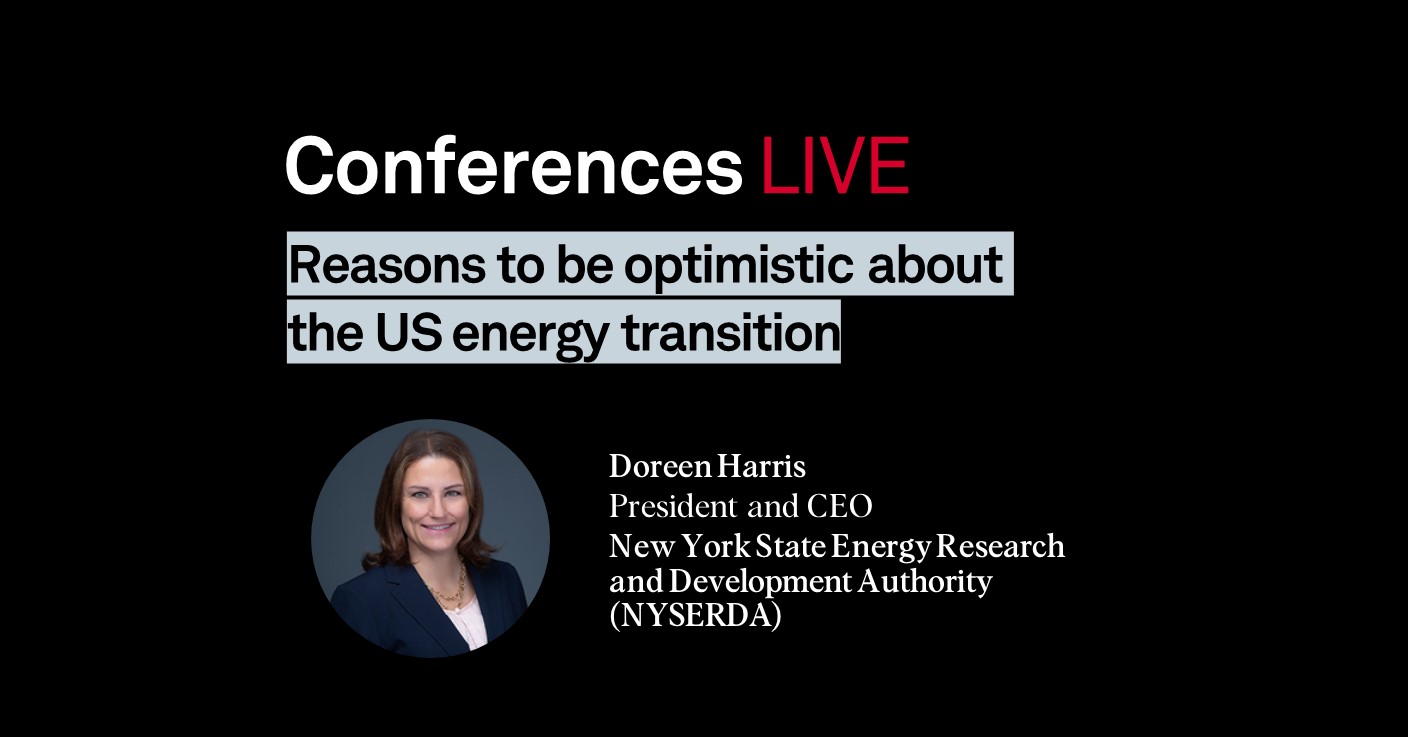
Doreen Harris, president and CEO of the New York Energy Research and Development Authority discusses the US clean energy future with SP Global Commodity Insights Learn more at the Global Power Markets Conference | Las Vegas | April 15-17, 2024 Conferences LIVE
MARCH | Houston, TX
Established in 1985, the World Petrochemical Conference is the premier assembly of industry leaders, global experts and government officials convening for thought-provoking dialogue and in-depth discussions around the major strategic issues facing all…